
From tightly choreographed lighting to video that followed the band, BlackTrax connected movement and visuals across David Byrne’s 147-show world tour.
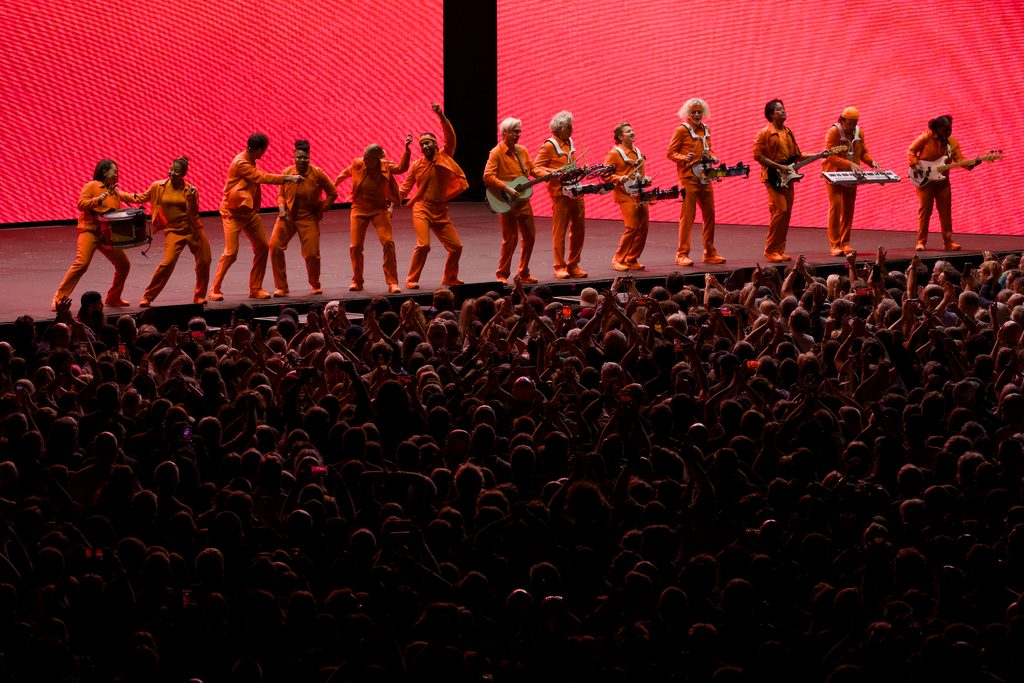
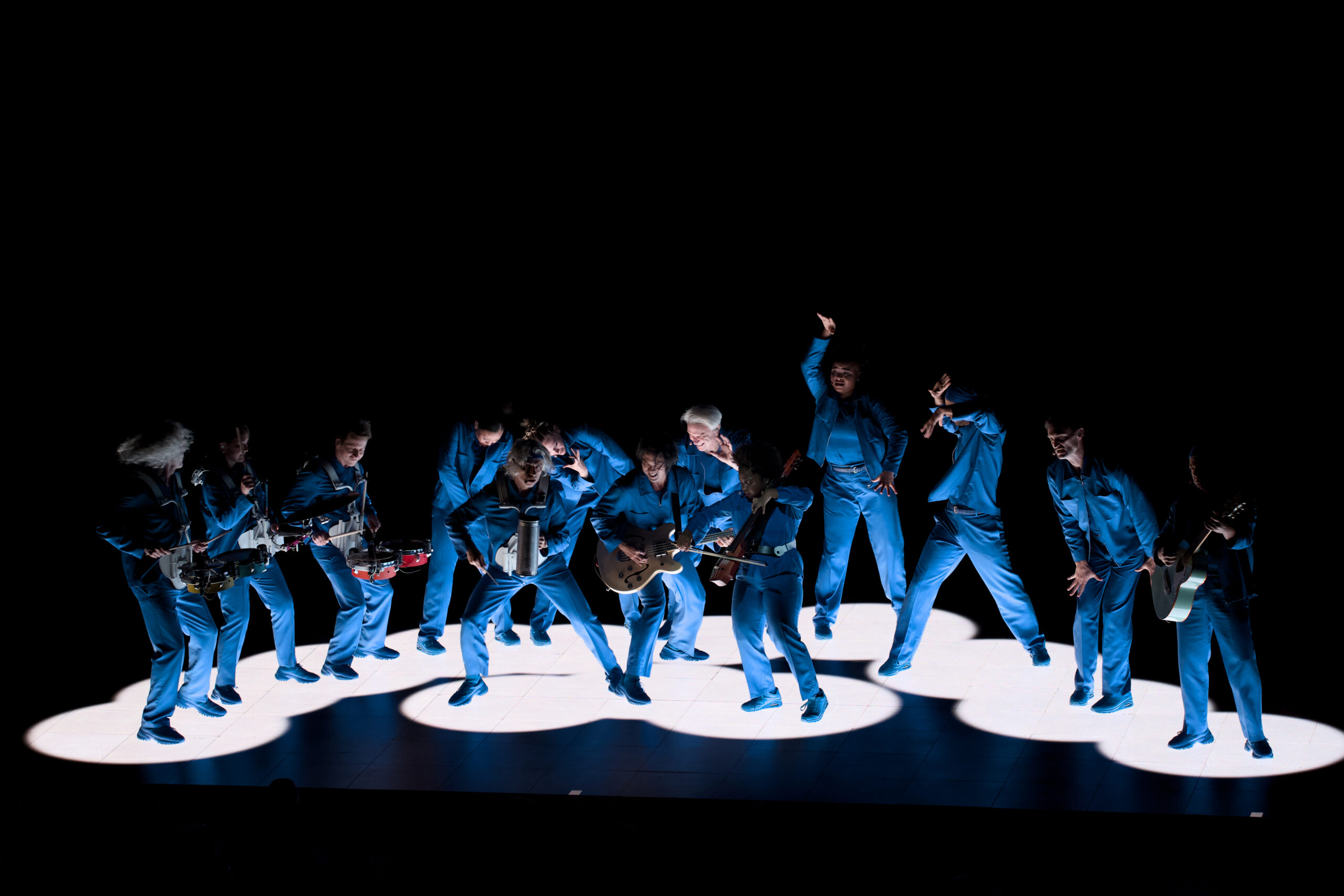
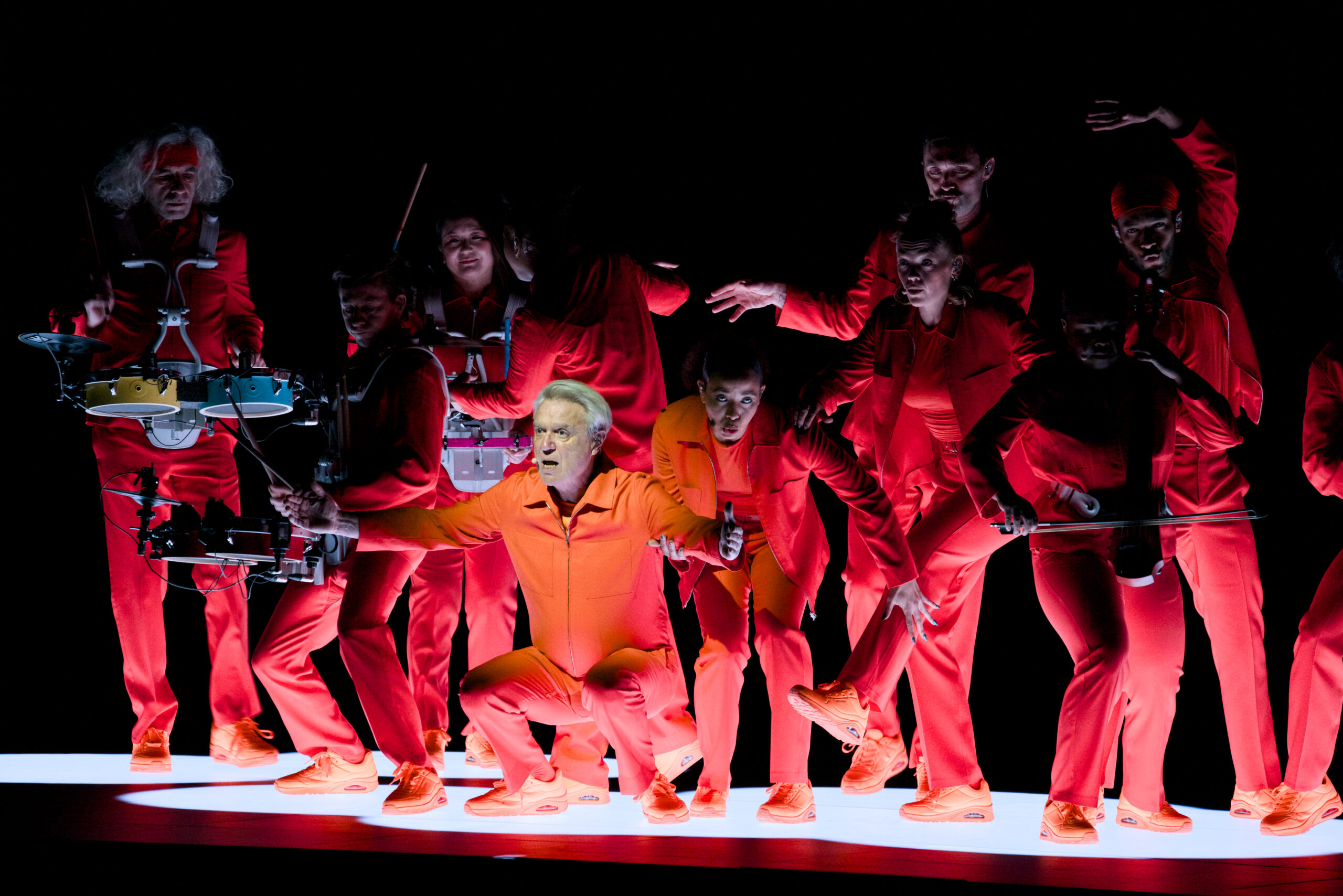
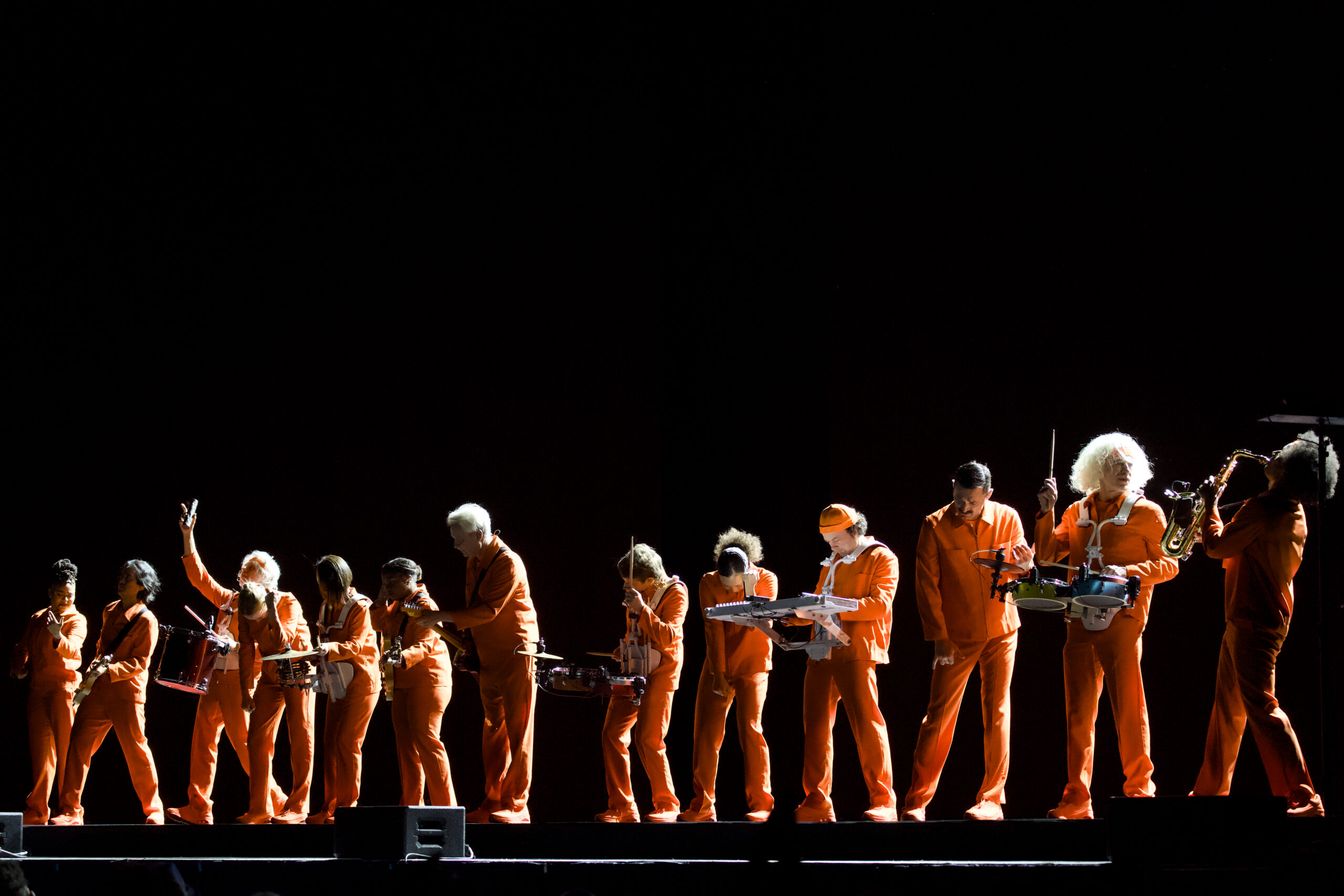
On David Byrne’s Who Is The Sky? tour, 13 musicians performed detailed choreography within an LED environment. With no risers, set pieces or backline, the stage left the performers’ movements in full view. Lighting needed to follow each person precisely, while video content responded to their positions.
BlackTrax provided real-time tracking for automated follow-spots and video content control throughout the tour, which ran from September 2025 to September 2026. From adapting to different stage dimensions to preparing for outdoor festival performances, the system helped the production team carry the show’s lighting and video interactions into a wide range of venues.

Precise lighting within an immersive stage
The performance space combined an LED floor with a 180-degree curved video wall extending around from its downstage corners. This created an immersive setting but also placed specific demands on the lighting.
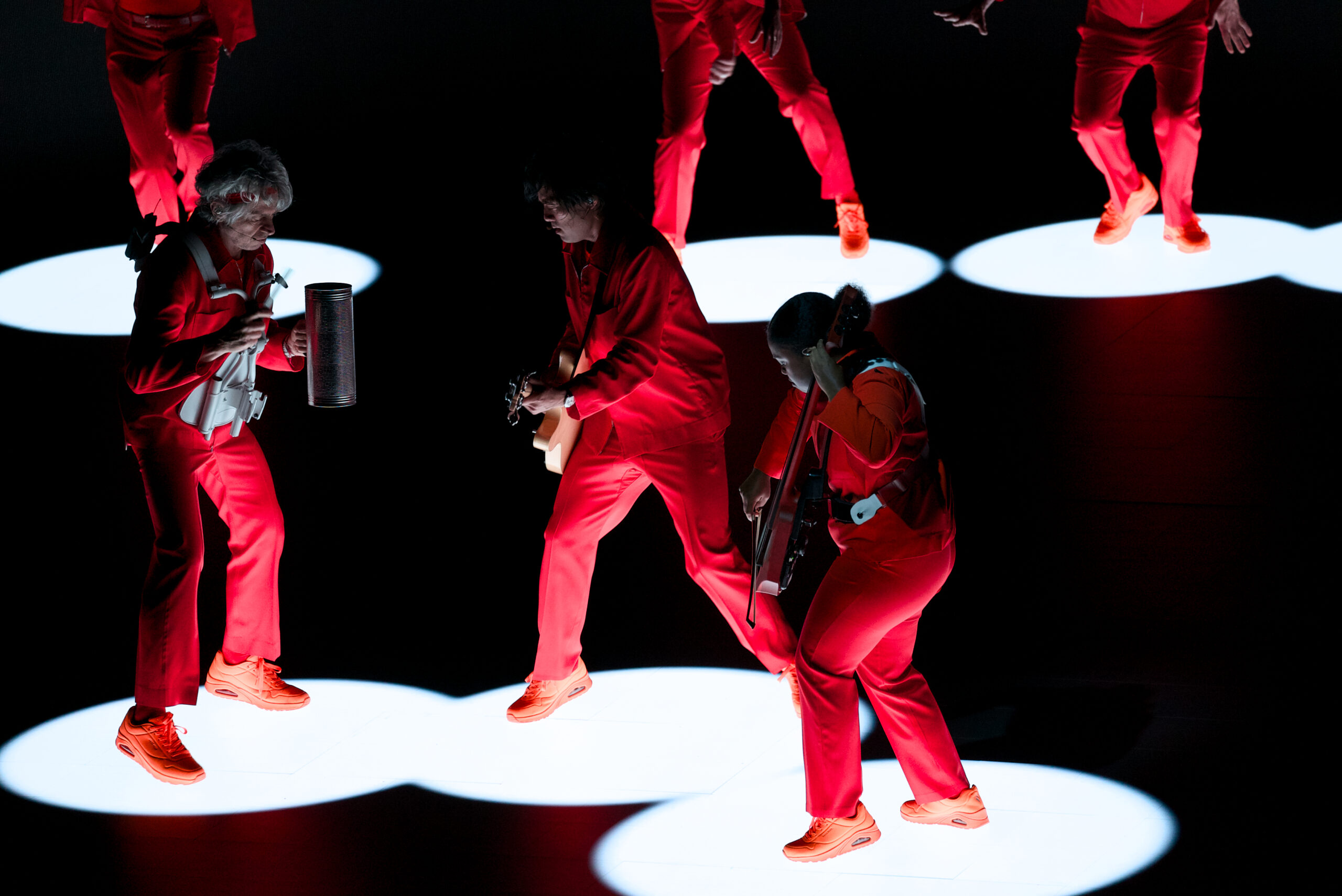
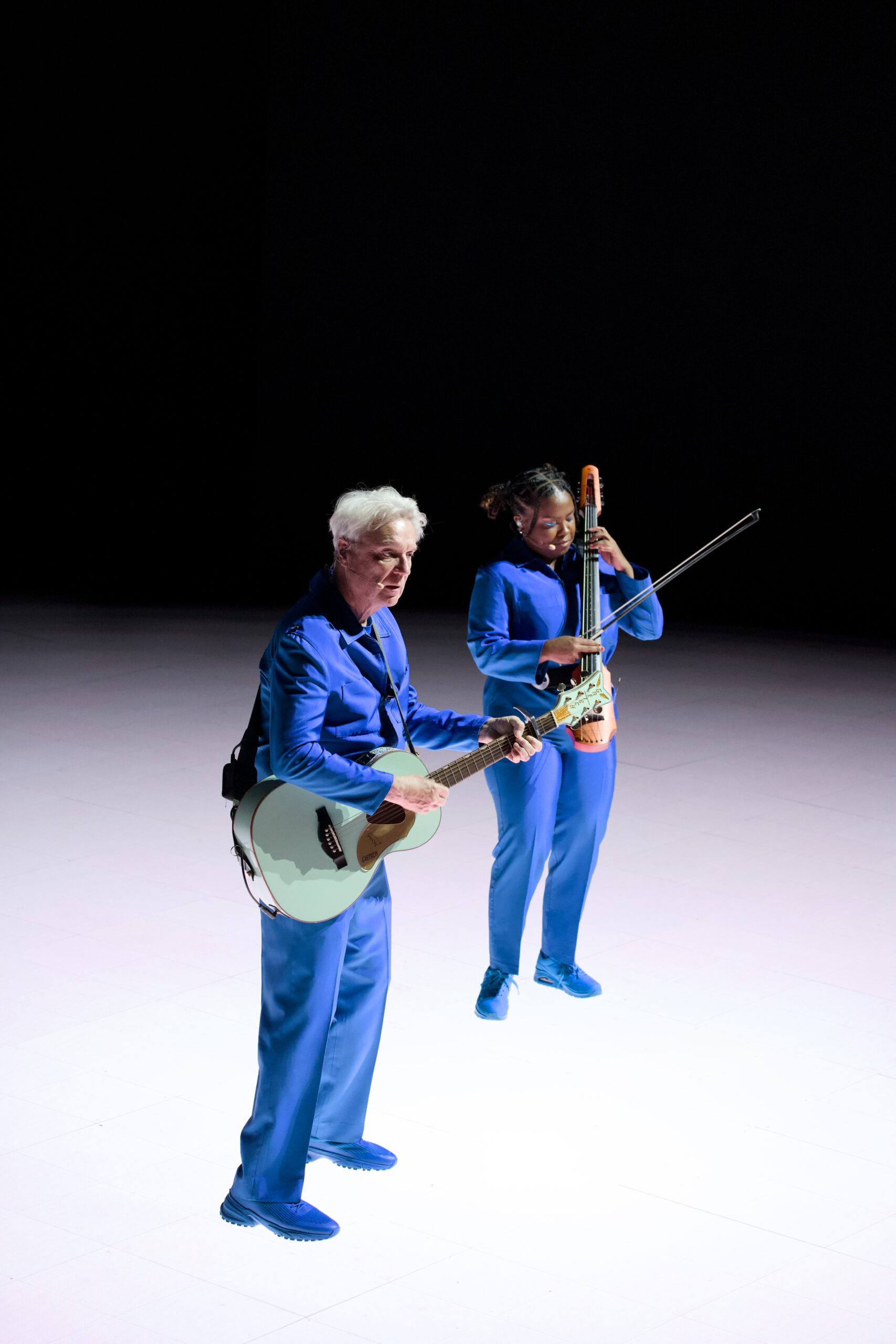
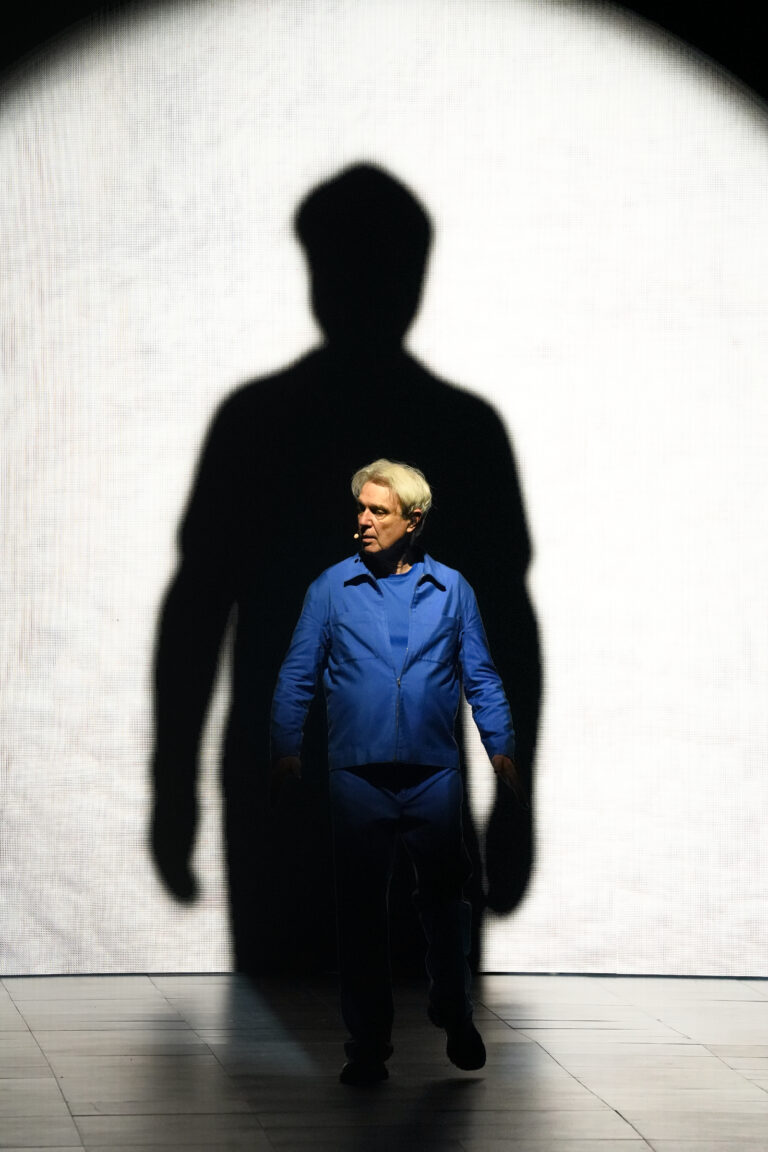
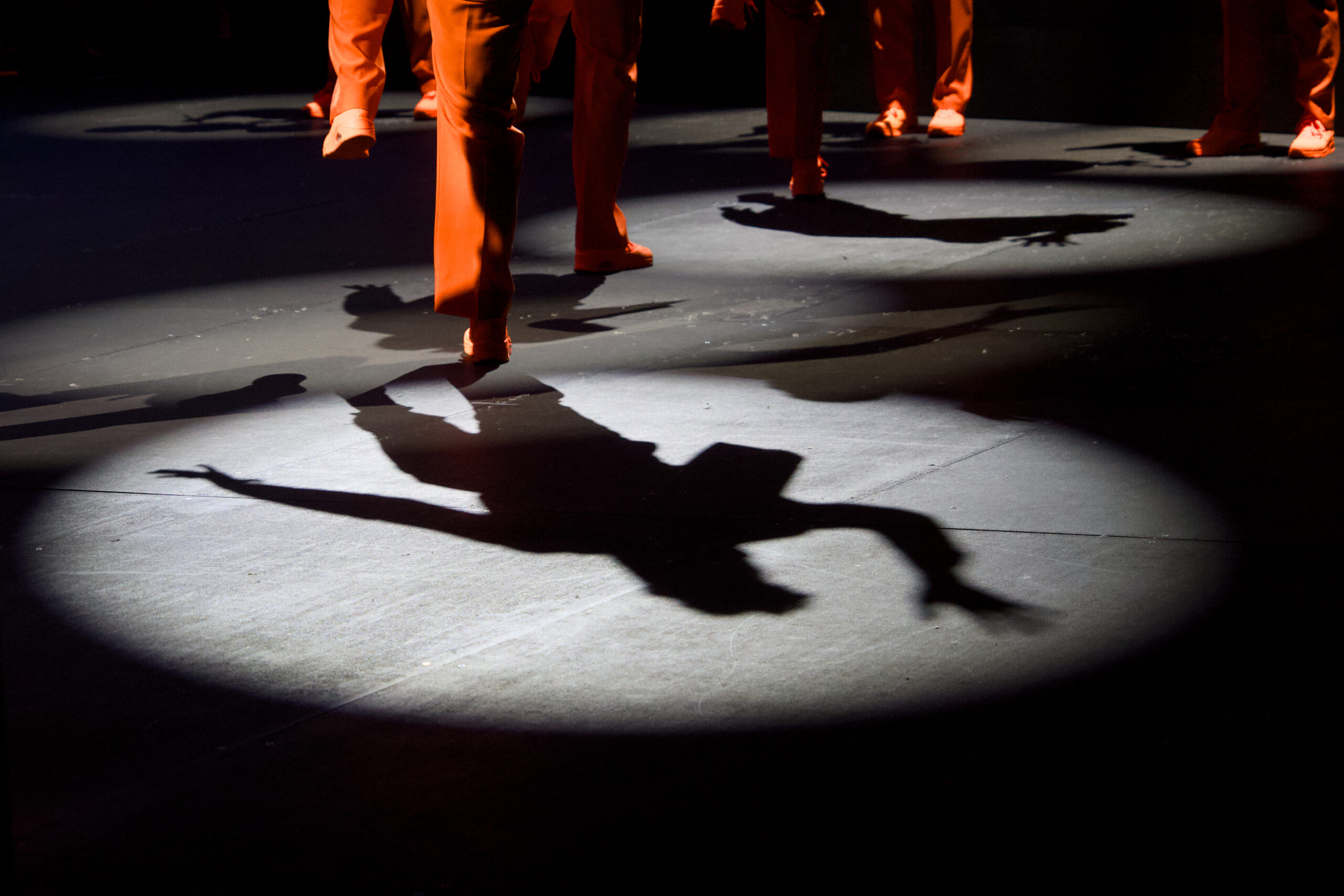
With 13 performers moving close together, accurate tracking allowed the team to keep beam diameters narrow and minimise unwanted spill onto the LED walls and neighbouring band members.
In the full-size production, BlackTrax controlled eight Robe iForte LTX WB fixtures for key lighting and 30 Ayrton Rivale profile fixtures for side, back and top lighting. The system followed the performers’ actual positions as they moved through the choreography.
The tour’s BlackTrax Engineer, Sam Augustus, brought more than ten years of experience with the technology, beginning with Muse’s Drones tour in 2015. His experience included nearly 600 shows, with 292 performances across Byrne’s American Utopia and Who Is The Sky? tours.
House in Motion
Video Credits: Donnie O’Brien, Ben Rotella
Making video respond to the performers
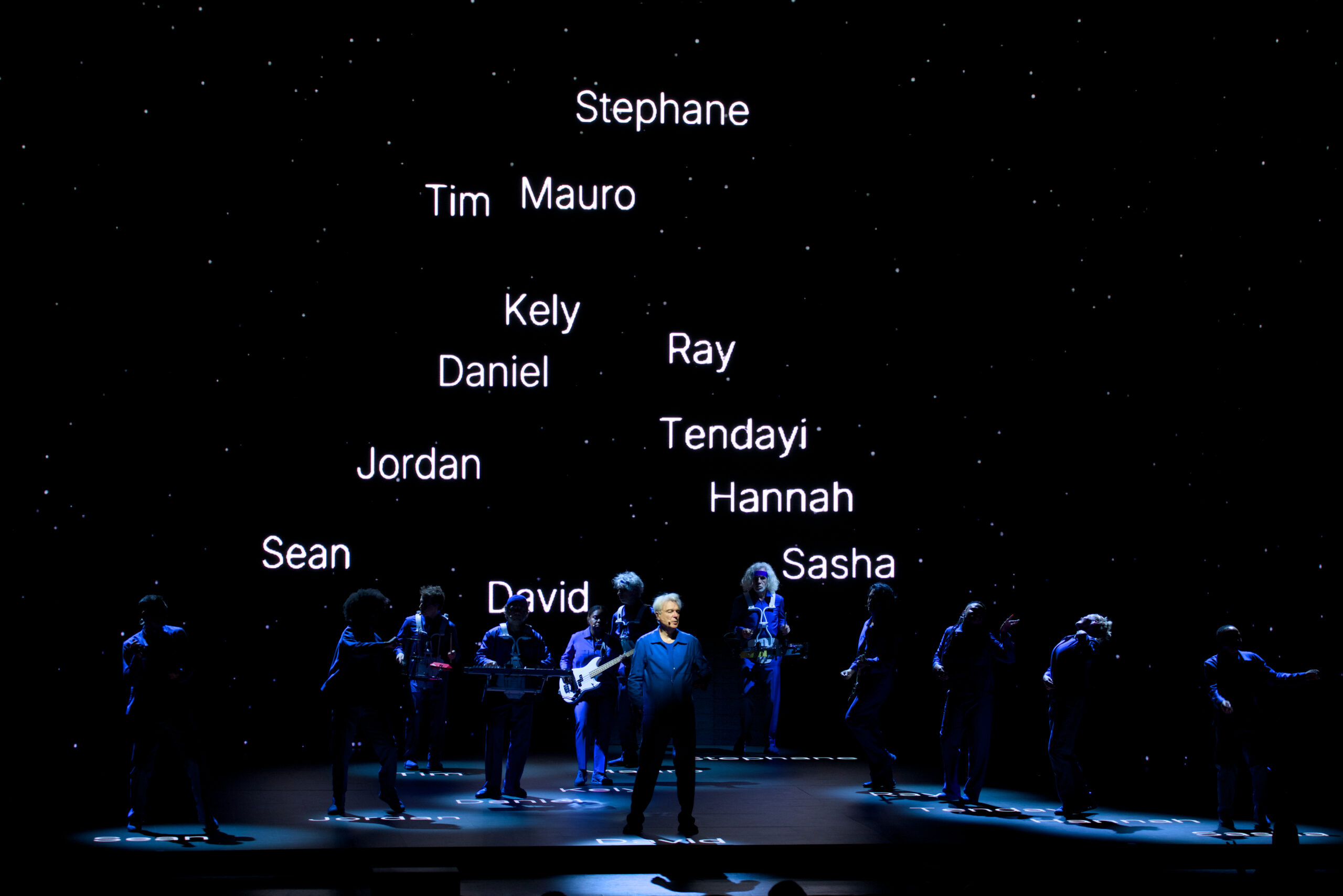
BlackTrax also supplied tracking data to the video department’s disguise media servers, connecting the performers’ movements with the content surrounding them.
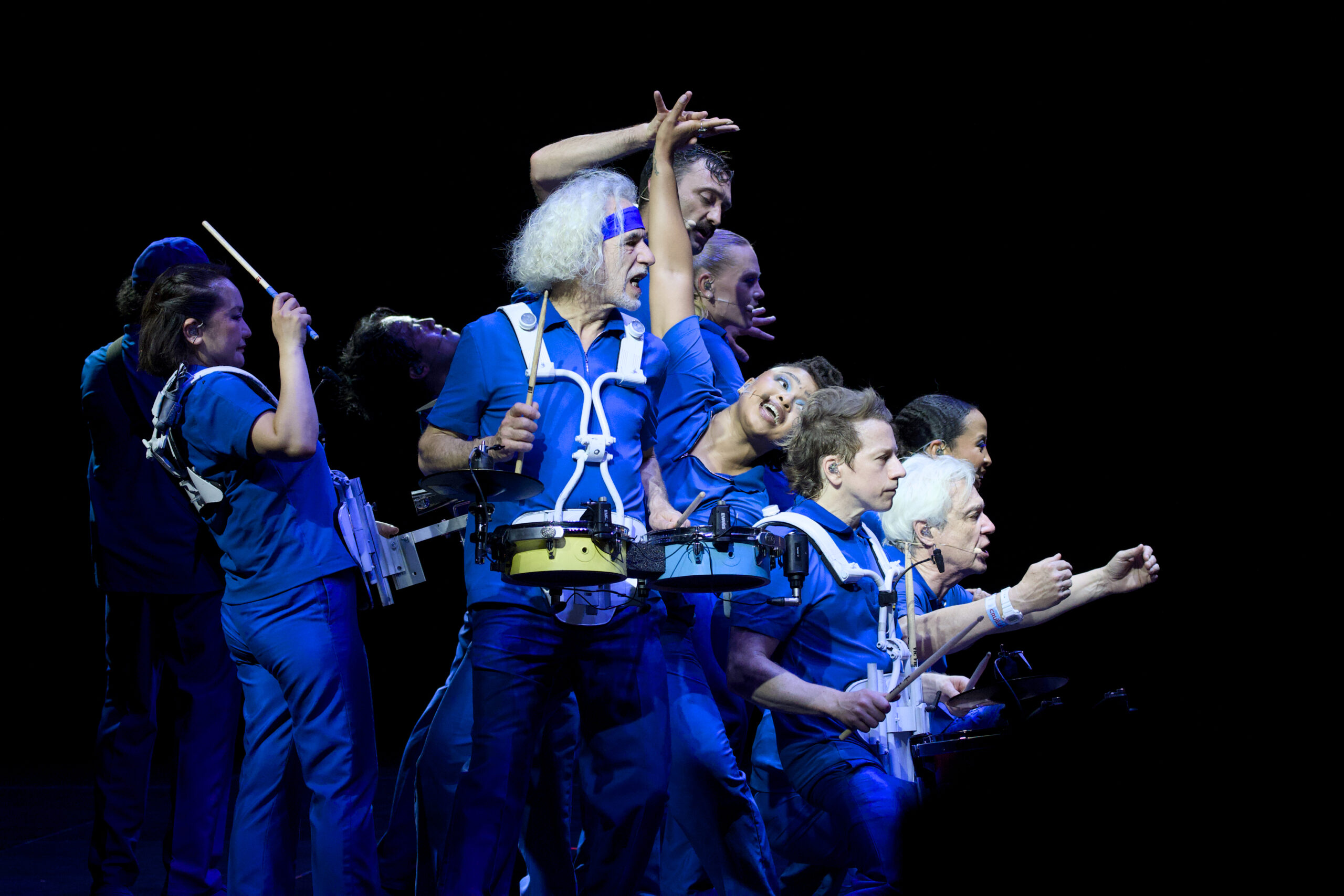
During Houses in Motion, the keyboard player’s position and calculated rotation controlled the position and rotation of video content throughout the LED environment.
For Independence Day, Psycho Killer and Burning Down the House, individual band members’ positions drove generated content that followed them across the LED floor or the upstage section of the video wall.
These applications made real-time tracking part of the show’s visual storytelling, alongside its role in keeping performers lit.
Adapting the show to different venues
Across 147 shows, the production could not always retain its original stage dimensions. Changes to the proportions of the performance space affected the performers’ spacing and the timing of choreographic sequences.
Because BlackTrax followed each performer in real time, the lighting could accommodate those changes without the team having to meticulously revise static focus positions and cue timings each time the stage layout changed.
The system also helped the team manage unexpected moments during performances. Instrument issues or wardrobe malfunctions occasionally kept a musician offstage longer than planned or required them to return from a different side.
Augustus identified Smooth Pickups as a particularly useful feature in these situations. It accommodated unplanned returns, avoiding unwanted tracking artefacts when the show had moved into its next section or a performer re-entered from an unexpected position.
Video Credits: Sam Augustus
Choosing trackables for the performers
Dark Art Creative supplied the BlackTrax system, continuing its involvement from Byrne’s previous American Utopia tour. The wearable setup combined three beacon products to suit different performance requirements.
Ten band members wore Beacon Classics in belt packs, connected to stringers integrated into their show jackets. Augustus chose them based on more than ten years of successful touring experience with the hardware.
“Considering the challenging conditions they have been put through on hundreds of shows, their reliability has been incredible,” said Sam Augustus.
Two percussionists used Mini Beacons on the rigid harnesses carrying their instruments. This allowed the crew to prepare the harnesses before the performers were present, simplifying the process of getting them ready for the show.
The keyboard player’s setup required a further adjustment. Already wearing four belt packs and their associated cables, he was experiencing physical discomfort. The team replaced his Beacon Classic with two Mini Beacon Waves, each housed in a pouch on either side of his jacket. This reduced belt pack clutter and allowed the tracking hardware to be prepared in the jacket before he dressed.
Calibrating within a demanding touring schedule
The production frequently loaded in, calibrated, performed and loaded out on the same day. Time for tracking setup had to fit alongside other departments’ checks and maintenance.
12 BT Sensor SX13 cameras covered the tracking volume. Four were mounted on the advance truss, with the remaining eight spaced across the header trusses above the video walls. Their placement provided an almost complete perimeter view of the performance space, which the engineer credited as a major contributor to the quality and integrity of the tracking data.
Camera calibration took under five minutes for this tracking volume, while calibrating the 30 tracking fixtures took approximately 25 minutes, according to Augustus. As he explained:
“Fortunately, both processes of camera calibration in Motive and the fixture calibration in Blacktrax proved to be reliable and swift.”
Fixture calibration groups also helped the team use limited preparation time effectively. The lighting designer and Augustus could work simultaneously on calibrating and focusing different parts of the rig.
Integrating lighting and video on the road
The system ran on two Dell Precision Rack 7910 BT Servers using BlackTrax 2.5.2, BTWYG R47 and OptiTrack Motive 2.3.2.
Luminex LumiNode 12 nodes handled sACN and RTTrPL merging. GigaCore 26i switches supported the BlackTrax server rack, while GigaCore 10 switches served the wider camera network. The video department received the RTTrPM tracking stream on a disguise setup comprising one EX3+ and four GX3 servers.
Sam Augustus, also highlighted Luminex Araneo software for its live overview of network status, helping identify network integrity issues as they arose.
Confidence from venue to venue
Across 147 shows, BlackTrax helped the production maintain precise performer lighting and responsive video while adapting to changing stage dimensions, unexpected entrances and demanding festival conditions.
For Augustus, that confidence came from the system’s integration with different lighting rigs and Motive’s performance outdoors:
“What stood out to me with Blacktrax was the ease of integration with the vast catalogue of lighting systems we encountered on our tour. This, and how well Motive handled festivals and outdoor conditions, meant that we could walk on stage in the morning knowing that we could deliver a show that night.”
Credits
Donnie O’Brien – Media Server Programmer and Technician
Ben Rotella – Video Engineer and Media Server Technician
Video Vendor – Fuse Technical Group
Simon Roberts – Screens Producer and Lead Programmer
Silent Partner – Content Creation
About BlackTrax
BlackTrax is the world’s most accurate, fastest, and reliable automated tracking solution for live events, broadcast, theatre, and immersive environments. By providing precise real-time positional tracking data, BlackTrax enables creative teams to automate and enhance lighting, audio, media, and stage technologies with unmatched accuracy and flexibility.
Ready to see what BlackTrax can do for your next production? Book a demo with our team today.