
James Carus is a volunteer Lighting Designer and Technician with Baddesley Amateur Theatre Society (BATS), a self-funded community theatre group in the UK. While James holds a degree in Lighting Design Technology, he stepped away from the industry for nearly a decade, balancing a full-time job and family life. When the opportunity came to volunteer with BATS, it felt like the right way back – on his own terms, and in service of something local. “Lighting has always been something I’ve cared about,” shared James. “Volunteering lets me give something back to the community while doing work I genuinely enjoy.”
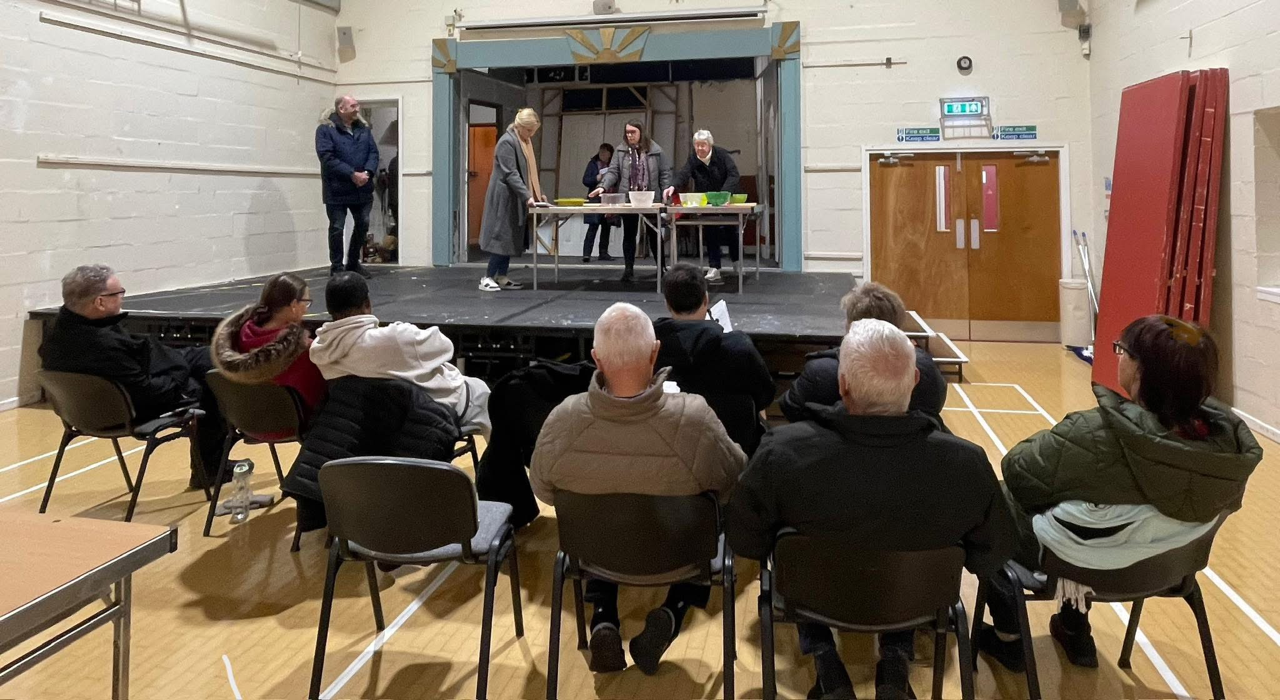
BATS is the definition of grassroots theatre. The group stages one show per year, just ahead of Easter, and operates on an incredibly tight budget. A recent production spent £200 on its set and recovered £190 by selling materials afterward. The theatre itself is a shared community hall used for everything from badminton to public meetings, which means nothing is permanent. The lighting rig is completely temporary, installed only during show week, and there’s no access to the space beforehand. Load-in, focusing, programming, technical rehearsal, dress rehearsal, and performance all happen in the same narrow window.
That kind of timeline leaves no room for guesswork, especially with a volunteer cast and crew. Historically, lighting at BATS had been simply lights on stage so the actors could be seen. It worked, but it didn’t contribute much beyond visibility. James saw an opportunity to change that, without overreaching or adding pressure to an already stretched team.
To make that possible, he turned to WYSIWYG.
Having used the software extensively during university, James already knew it suited the way he thinks and works. Other CAD tools never quite clicked the same way, but WYSIWYG always felt intuitive – placing fixtures, focusing, testing looks, and understanding how light would behave in a space. For this project, it became less about technical polish and more about survival. With no access to the venue and limited on-site time, pre-visualization wasn’t a luxury – it was the only way to plan properly.
The production, Agatha Crusty and the Village Hall Murders, is a comedy murder mystery, which presents a tricky balance. It needs tension and suspense, but it also needs visual punctuation to support the humour. In WYSIWYG, James began exploring how lighting could do more than just illuminate. Warm white scenes established the everyday village hall setting, while moments of heightened drama avoided traditional blackouts. Instead, murders snap into red light – intentionally strange, intentionally visible, and intentionally funny. The audience never loses sight of the performers, and the exaggerated lighting reinforces the tone rather than interrupting it.
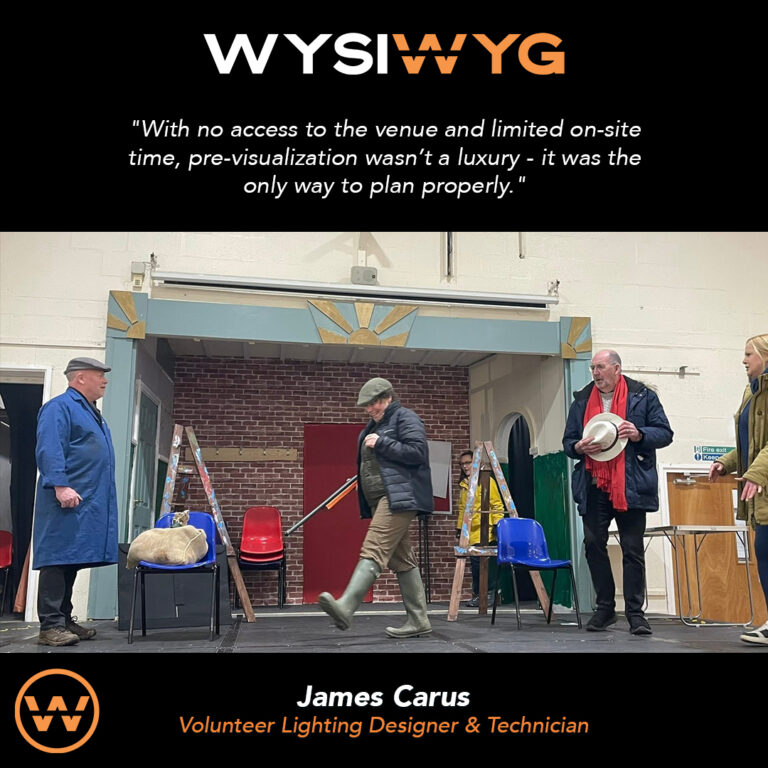
With a limited rig, flexibility mattered. James experimented with blue and red combinations to create separation, mood shifts, and even the suggestion of police lights when needed. For moments of introspection, particularly involving the “Agatha Crusty” character, he tested ways to isolate her using colour and angle – creating space for internal monologues without adding fixtures the rig couldn’t support. All of this experimentation happened virtually, long before the first light was hung in the hall.
That preparation changed how show week would unfold. Basic scenes could be pre-programmed. Decisions about colour, timing, and transitions would already made. Instead of spending precious hours figuring out what might work, the team could focus on refining what already did.

For James, one of WYSIWYG’s biggest strengths is the ability to connect a lighting console and work in real time. When timelines are short – and they almost always are – that kind of workflow isn’t just convenient, it’s critical. It allows for play, experimentation, and problem-solving without burning out people or schedules.
When Agatha Crusty and the Village Hall Murders opens in March 2026, the audience may never know how much planning happened before the lights ever went up. But they’ll feel it – in the pacing, the atmosphere, and the moments where lighting becomes part of the storytelling rather than an afterthought. For a community theatre running on passion, the shift to WYSIWYG makes all the difference.