
Creative professionals face growing challenges alongside complex event setups. There must be harmony between multiple systems, real-time adaptability, and precise execution under pressure. Bridge creativity with technology to deliver flawless, immersive experiences.
- Visualizing outcomes before build is critical to avoiding costly on-site changes
- Real-time synchronization across lighting, video, and audio is essential
- Flexibility is key to handling constant last-minute adjustments
- Clear alignment between creative vision and technical execution prevents delays
- Advanced tools empower creative professionals to manage complex event setups with confidence
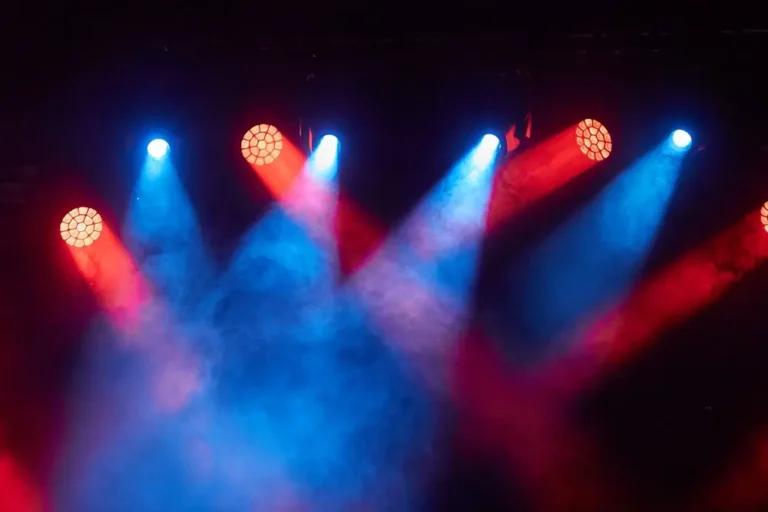
Creative professionals often orchestrate entire environments when creating high-impact stage productions. What audiences experience as seamless and spectacular stems from countless moving parts working in perfect harmony.
In such contexts, precision, timing, and adaptability are critical. Expectations keep rising while margins for error remain razor-sharp.
What makes creating an event and stage presentation so challenging? And how can creative teams stay ahead of the curve?
The Growing Complexity of Modern Event Setups
Event setups have transformed dramatically over the past decade. What was once a relatively linear (if questionably efficient) “design-build-execute” workflow is now a highly dynamic, interconnected ecosystem.
Today’s stage setup for events often involves a fusion of lighting, video, audio, automation, and real-time tracking systems. This results in immersive, responsive environments.
Rising audience expectations majorly drove this shift. Whether it’s a concert, theatrical production, or high-profile trade show presentation, audiences now expect precision, spectacle, and seamless execution. Static designs won’t cut it anymore. Modern event setups must adapt in real time, reacting to performers, speakers, and even audience engagement.
As a result, creative professionals manage unprecedented complexity. Each system must perform flawlessly on its own and integrate perfectly with every element on stage.
The more ambitious the event design, the more intricate the execution. This turns every event setup into a high-stakes balancing act between creativity and control, as the following challenges demonstrate.
Visualizing the Final Outcome Before Setup
Creative professionals in complex event setups often must make critical design decisions long before anything is physically built. Lighting looks, stage layouts, and timing cues often receive approval based on concepts or renderings. They can’t always depend on any realized preview of the final environment.
This creates a significant risk. Without accurate visualization, even small misalignments between creative intent and technical execution can lead to costly revisions on-site. What looked compelling in a 2D plan or static render may not translate effectively once fixtures are hung, angles are adjusted, and performers enter the space.
For large-scale productions, these adjustments can quickly impact timelines, budgets, and quality. Traditional workflows simply weren’t designed for the level of complexity seen in modern event setups. As a result, creative professionals must often rely on approximation instead of certainty. making it harder to confidently deliver on their vision.
Coordinating Multiple Systems in Real Time
Lighting, video, audio, cameras, and motion elements must precisely synchronize to create a cohesive experience. For creative professionals, this means managing an entire ecosystem of interdependent technologies:
- A spotlight needs to follow a performer seamlessly across the stage.
- Video content must align perfectly with cues.
- Automated lighting and effects need to respond instantly to movement or music.
Even slight delays or miscommunications between systems can break immersion and become immediately noticeable to the audience.
Complicating matters, different teams control many of these systems with a variety of tools and workflows. Without a unified approach, creative professionals are left bridging gaps between departments, often doing so under tight time constraints.
As event setups grow more sophisticated, real-time synchronization isn’t just a technical “nice-to-have.” It’s essential to the kind of seamless, high-impact experiences audiences want.
Managing Constant Change
No matter how detailed the planning process, live event setups can constantly evolve. Performers adjust blocking, speakers tweak their timing, and production elements shift, sometimes mere minutes before a show begins. For creatives, this means operating in a state of controlled unpredictability.
The challenge is maintaining creative integrity while adapting in real time. Traditional, rigid systems that rely solely on fixed cues and pre-programmed sequences can’t easily accommodate last-minute changes. Even small adjustments can require time-consuming reprogramming or manual intervention, which increases the risk of errors during critical moments.
In high-pressure environments, flexibility becomes just as important as precision. Creative professionals need workflows that allow them to respond instantly without compromising the overall vision.
The Gap Between Creative Vision and Technical Execution
At the heart of every successful event setup is a delicate balance between artistic vision and technical execution. Creative professionals think in terms of mood, storytelling, and audience impact, while technical teams focus on systems, specifications, and feasibility. Translating between these two worlds is often easier said than done.
Misalignment can happen quickly. A lighting design that looks stunning in concept may present challenges when mapped to real-world fixtures. A creative cue might require complex programming that isn’t immediately apparent during early planning. Without clear communication, these gaps can create delays, compromises, or rework during setup events.
This disconnect damages efficiency and can dilute creators’ original visions. The most successful event setups are those where creativity and technology are fully aligned, allowing ideas to move seamlessly from concept to execution without losing their impact.
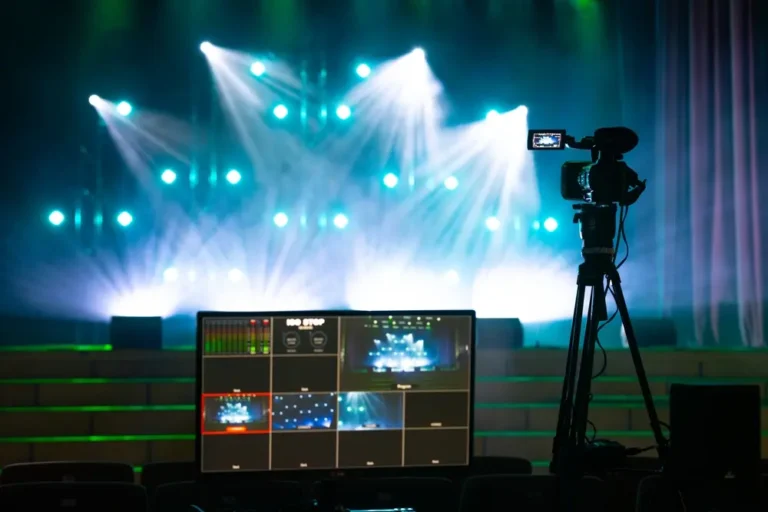
Time Constraints and High-Stakes Environments
Time is one of the most unforgiving constraints in any event setup. Load-in schedules are tight, rehearsal windows are limited, and every department works against the clock to bring the production home. This compressed timeline leaves little room for experimentation or error.
At the same time, the stakes couldn’t be higher. Whether it’s a live broadcast, a global tour, or a high-profile corporate event, there’s no opportunity for a second take. Every cue, transition, and effect must perform flawlessly in real time.
This combination of limited time and high expectations places immense pressure on creative professionals. Success can’t rely on strong planning alone. It demands the tools and workflows necessary to execute quickly, accurately, and confidently.
How Technology Redefines What’s Possible
As event setups grow more complex, technology serves as an increasingly critical aide to creative professionals.
Advanced software from CAST – for advanced lighting design (WYSIWYG) — shifts workflows from reactive to proactive. Teams can design, test, and refine their ideas well before entering the venue.
Previsualization platforms, for example, enable designers to build entire environments digitally, experiment with lighting and staging, and identify potential issues early in the process. This reduces uncertainty and allows for more confident decision-making.
Similarly, real-time tracking systems transform the responses and interactions of lighting, video, and audio. They respond based on movement and positioning to create truly dynamic experiences.
Perhaps most importantly, modern solutions bring greater integration across systems. Instead of managing disconnected tools, creative professionals can work within unified ecosystems that streamline coordination and improve precision.
CAST solutions redefine what’s possible in complex event setups. They give creative professionals the control and flexibility they need for high-level execution.
Empowering the Modern Creative Professional
Complexity in event setups isn’t going away. In fact, it’s only increasing, as audiences demand greater spectacle in everything from speaking engagements to pop concerts. For creative professionals, this presents both a challenge and an opportunity.
By embracing the advanced, integrated design and execution methods enabled by WYSIWYG software, creative professionals can move beyond traditional workflow limitations. What once felt unpredictable becomes manageable. What once required compromise becomes an opportunity for innovation.