
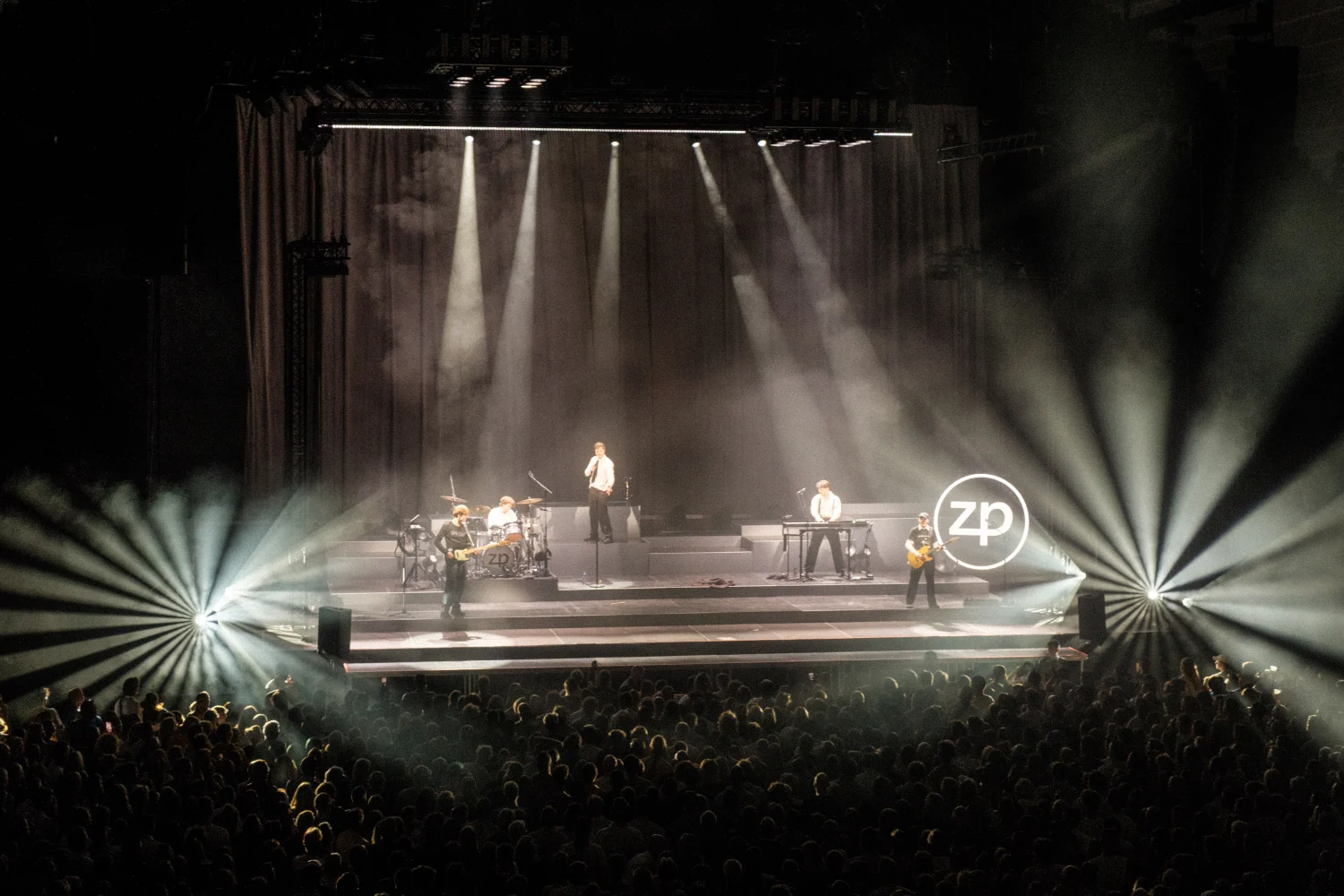
TL;DR: BlackTrax brings real time tracking into existing lighting workflows, giving designers greater precision, flexibility, and creative control without requiring a complete change to the production setup.
- Compatible moving fixtures can respond to a performer’s real time position while the lighting console retains control of intensity, color, gobos, and other creative parameters.
- Automated followspots can use multiple fixtures and lighting angles, reducing reliance on a single traditional followspot position.
- AutoSpot Mode, Local Damping, Z Damping, and Prediction help produce smooth, natural tracking rather than reacting to every small movement.
- Dynamic cueing, automatic beam sizing, and offset tracking expand how fixtures can respond to performers and objects.
- Existing fixtures can switch between tracking and standard console control, helping reduce repetitive programming while maintaining flexibility across a live production.
A moving light can pan. It can tilt. It can zoom, iris, and change focus. What it cannot do on its own is know where a performer is in the room.
That missing information is where automated lighting comes in.
BlackTrax adds real-time positional tracking to an existing lighting workflow, giving compatible moving fixtures the information they need to respond to a performer’s actual position. Instead of programming every possible position a performer might reach, designers can use tracking data to keep fixtures pointed where the action is happening.
However, BlackTrax is not simply making a moving light follow a person. It is giving the lighting system access to spatial information that can become part of the creative design.
Integrating Automation Without Rebuilding the Lighting Workflow
Bringing automation into a live production doesn’t need to mean handing the entire lighting system over to an automated controller.
BlackTrax is a lighting automation system designed to work alongside the lighting console. It provides the positional information used to control pan, tilt, focus, zoom, and iris, while the console continues to handle creative parameters such as intensity, color, and gobos. Essentially, the designer decides how the performer should look, while BlackTrax helps determine where the fixture needs to be.
Fixtures can also be used for tracking when the production calls for it and returned to normal console control afterward. Existing moving lights therefore become another resource in the lighting system rather than dedicated equipment that can only perform one job.
From Traditional Followspots to Automated Followspots
A conventional followspot puts an operator between the performer and the light. The operator watches the performer and continually adjusts the fixture to keep the beam where it needs to be.
Instead of relying entirely on manual judgment, an automated followspot receives real-time positional information about the subject. BlackTrax can use that information to direct multiple fixtures toward the same performer from different positions.
Instead of taking creative control away from designers, this solution actually gives creatives more opportunities and choices. With BlackTrax, a production doesn’t have to depend on a single front followspot location when the rig offers better creative options elsewhere. That could mean front light for one section of a performance, a side angle for another, or several fixtures working together to shape a performer from different directions.
For most, automated lighting control improves the design, rather than taking control away from the human artists using these tools.
Better Tracking Requires More Than Raw Position Data
Knowing exactly where someone is does not automatically produce good lighting.
A performer can remain almost stationary while making dozens of tiny movements. They can walk, run, or dance with natural vertical movement. A fixture that responds to every change in position with equal sensitivity can look unstable, even when the tracking data is accurate.
BlackTrax includes tools designed to account for this difference between precise tracking and visually effective lighting.
AutoSpot Mode
AutoSpot Mode is designed to make automated fixtures behave more like a well-operated followspot. It works with Local Damping and Z Damping to help produce smoother tracking rather than simply reacting to every movement captured by the tracking system.
Local Damping
Local Damping helps BlackTrax recognize small movements around a performer and disregard them when they should not affect the fixture. A performer can shift their weight, gesture, or make another subtle movement without causing the light to appear to shake around them.
Z Damping
When someone walks or runs, their body naturally moves up and down. Z Damping considers that movement on the height axis and helps keep the light visually stable. The fixture follows the performer rather than visibly reacting to every step.
Prediction
Even high-quality fixtures do not all respond at the same speed. BlackTrax provides prediction options that account for fixture behavior and help improve tracking performance. In other words, effective lighting automation is not just about knowing where the subject is, but anticipating how the fixture will get there.
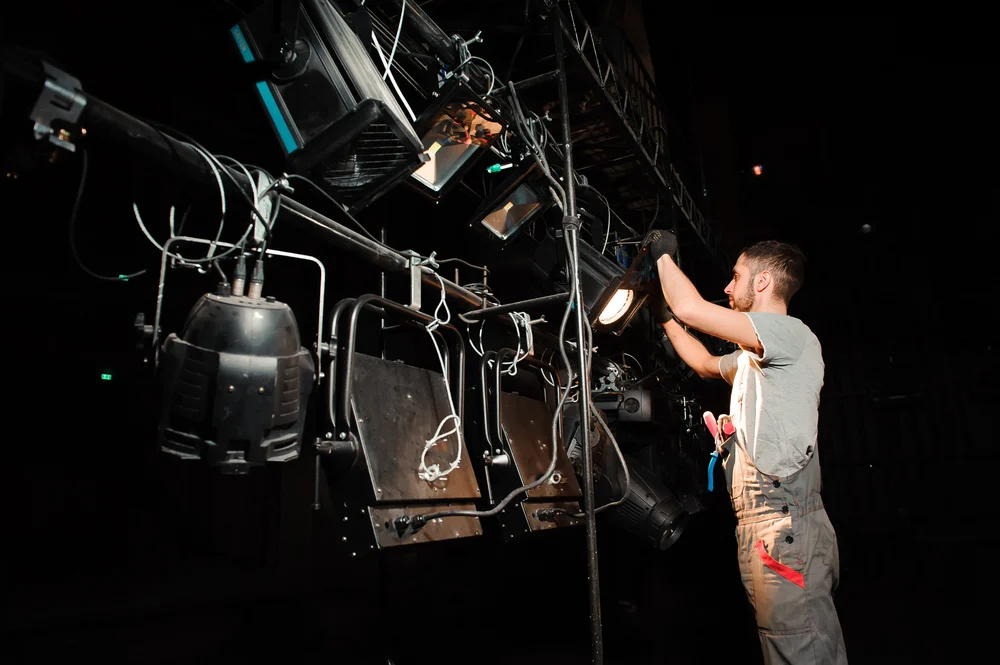
Expanding What Existing Moving Fixtures Can Do
Once tracking becomes part of the lighting system, designers can use moving fixtures in ways that are difficult to achieve with conventional cueing alone.
Multiple Tracking Angles
A performer does not always need to be treated from the same direction.
Multiple fixtures can track the same subject from different positions, allowing the designer to build front, side or back light into the tracking design, which helps when the stage layout, audience configuration or creative concept makes a conventional followspot position impractical.
BlackTrax has already been used in productions where the freedom of movement is central to the show. On Eric Church’s Gather Again Tour, for example, the in-the-round stage meant performers were surrounded by the audience, while BlackTrax enabled 64 automated followspots to simultaneously track eight targets.
Dynamic Cueing
Positional information can become an input for a wider automated production environment. Lighting behaviors can change based on where a tracked person or object is located, allowing the position of a performer to influence what happens elsewhere in the show.
That opens up possibilities for reactive cues, interactive environments, and productions where lighting needs to respond to movement rather than simply follow a predetermined timeline.
Automatic Beam Sizing
The relationship between a fixture and performer changes as the performer moves through the space. A beam that looks right at one distance can become too large or too small at another.
Automatic Beam Sizing can use zoom and iris behavior to help maintain a more consistent beam diameter as that distance changes, resulting in a controlled pool of light without requiring the designer to program individual beam adjustments for every position.
Offset Tracking
With offset tracking, the lighting target can be shifted in XYZ space. A beacon positioned lower on a performer, for example, can be offset so the fixture aims toward the upper body. This gives designers another level of control over the relationship between tracking data and the final look.
Where Lighting Automation Fits Into the Production Process
The strongest case for lighting automation is not that it replaces the lighting team. It is that it takes a repetitive positional task and makes it part of the larger design.
The designer can decide which fixtures should track, when they should track, and what those fixtures should look like. The console still controls the creative parameters that define the lighting treatment. Tracking provides the spatial information that makes those decisions responsive to the performer.
That combination also supports consistency from one performance to the next. Instead of depending entirely on an operator manually judging a performer’s position throughout every movement, the system can work from continuous tracking data.
For productions with complex movement, large stages, or performers who are not expected to hit exact marks, this can remove a significant programming burden.
What Makes an Automated Lighting System Useful on a Live Show?
Automation only has value when it works within the realities of production. That means maintaining the designer’s creative control, working with the fixtures already available in the rig, responding to performers in real time, and producing movement that looks intentional rather than mechanical.
BlackTrax is built around those requirements. Its real-time tracking provides X, Y, and Z positional data as well as rotational information, while its lighting workflow gives designers control over how that information is translated into fixture behavior.
As a result, creatives gain access to a lighting system that can respond to where a performer actually is, use that information creatively, and return those same fixtures to conventional lighting duties when the show requires it.
CAST and BlackTrax: Add Intelligent Tracking to Your Existing Rig
CAST developed BlackTrax to bring real-time tracking into demanding live production environments. For lighting, that means turning compatible moving fixtures into intelligent tracking lights while keeping the lighting console central to the creative process.
BlackTrax can support automated followspots, multiple tracking angles, dynamic lighting behaviors, automatic beam sizing, offset tracking, and the processing tools needed to make automated movement look natural. It gives designers another way to use the fixtures already in their lighting systems, without giving up the creative control that makes a lighting design a lighting design.
Ready to explore what tracking could add to your existing workflow? Request a BlackTrax quote