
“It became a passion of mine, and from then on, no event ever left my company without first going through WYSIWYG.”
— Rodrigo Rocca, Lighting Designer
Lighting designer Rodrigo Rocca has been working in the industry since 1991. Starting his career with analog lighting, Rodrigo credits those early years with giving him a solid foundation for the career that followed.
Planning has always been part of his process. Before delivering an event, he would first create a project, even if, in the early days, that meant starting with a simple drawing.
That process evolved in the mid-2000s when Rodrigo discovered WYSIWYG.
Since then, WYSIWYG has become a fundamental part of the way he approaches his projects. Today, he designs for major festivals, concerts and renowned artists, with experience spanning electronic music festivals, corporate events, product launches, exhibitions, theatre, DVD productions and fashion shows.
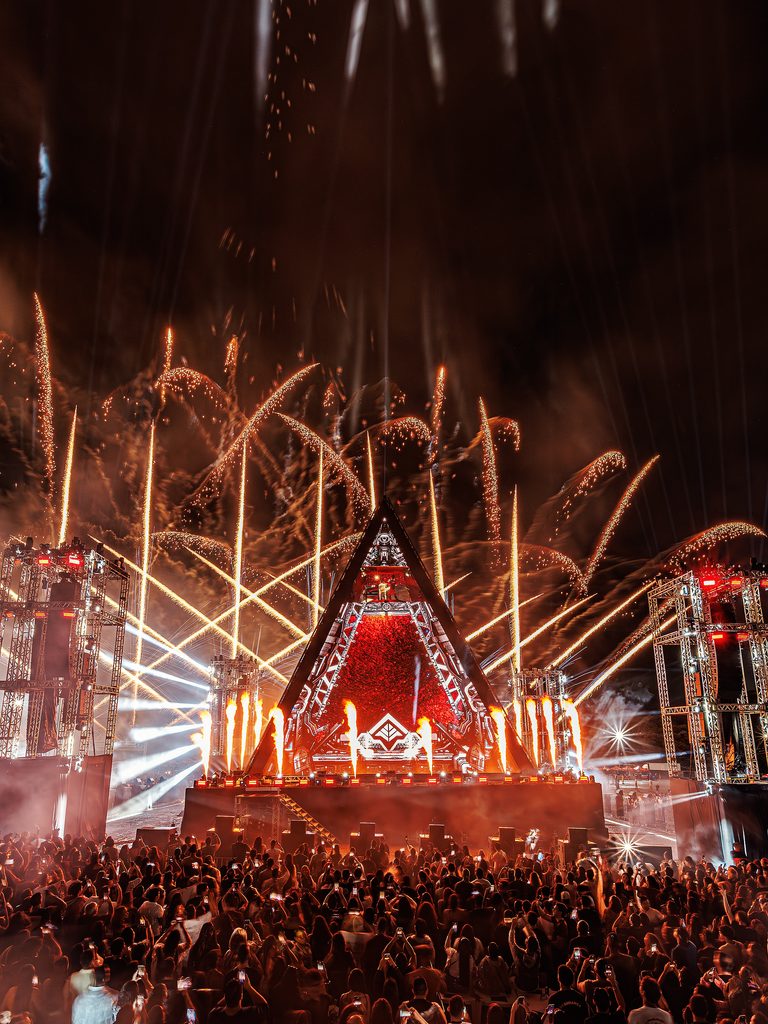
That workflow was put to use for Alok’s Pyramid show in Teresina, Piauí, Brazil, a project with a unique set of creative and technical challenges.
A Stage Unlike Any Other
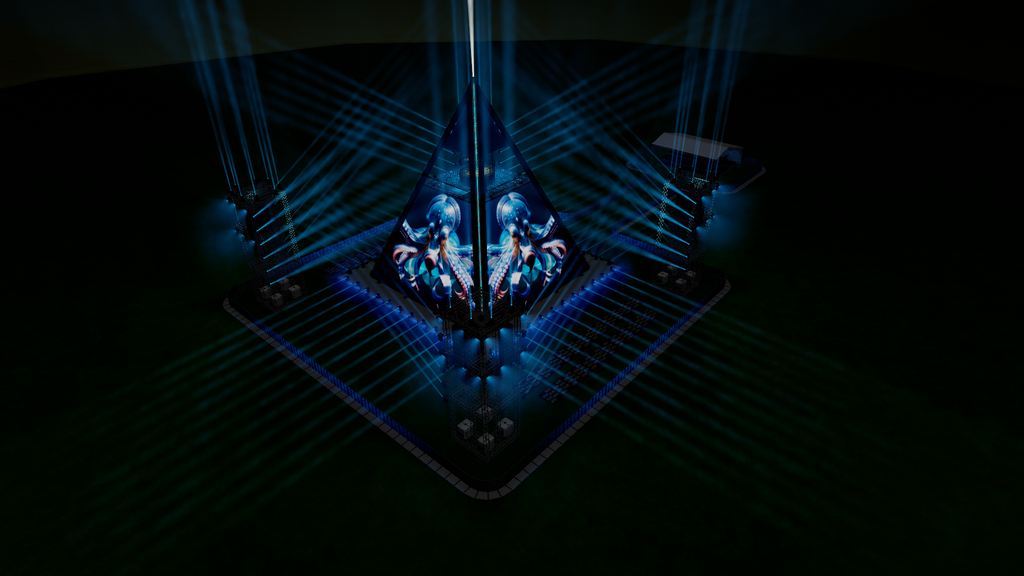
For Rodrigo Rocca, what makes the project unique starts with the concept itself: an artist performing from the top of a pyramid made of LED screens, completely covered with lighting and special effects.
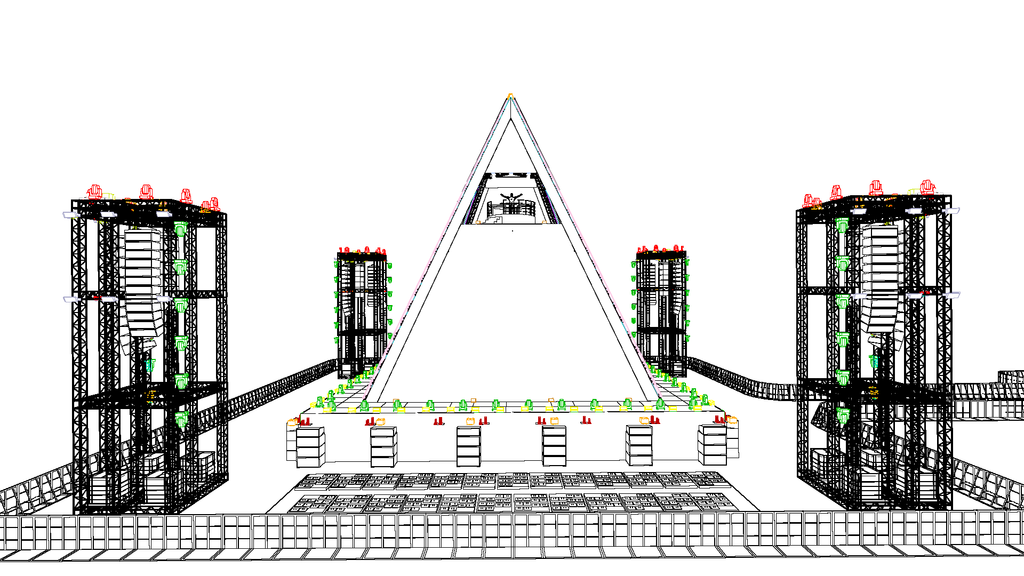
Bringing that concept together meant considering much more than the visual design.
The team needed to determine how the structure would fit together, create a stage at the top, plan access points and equipment positions, consider how people would move around the structure, and determine how the artist would safely reach and perform from the top of the pyramid.
As Rodrigo Rocca explains:
“Because the project is so unique, the challenges involved are equally unique.”
The latest version of the structure brought another specific requirement: the pyramid was reconfigured to fit inside a football stadium and to be constructed exclusively from box truss components.
“WYSIWYG was involved from the moment the first truss was placed in the design.”
Making the Structure Fit
One of the biggest challenges Rodrigo Rocca identifies was the limited assembly time compared with the size of the project.
The production involved almost 120 tons of equipment and a large box truss structure. In its latest version, the entire pyramid was constructed using 30×30 box truss, with angled components developed specifically for the project.
WYSIWYG played a fundamental role in developing that structure.
“WYSIWYG was crucial in ensuring everything fit together perfectly angled components were even custom-developed for this project.”
For Rodrigo Rocca, the result was exactly what the team had worked towards: the structure came together and the individual pieces fit as intended.
From Concept to Final Showfile
WYSIWYG wasn’t used for only one stage of the project.
Rodrigo Rocca relied on virtually every major feature available to him, describing WYSIWYG as the central hub of the workflow from the initial concept to the final show file.
“Each module played a specific role in turning an ambitious idea into a production-ready design.”
CAD was used to build the structure and develop the complete technical design from the ground up.
Design allowed Rodrigo to explore different equipment options and evaluate the performance of each fixture within the overall design.
Renderings were used to create realistic previews and validate creative decisions before the build.
Visualization connected the project to the lighting console, allowing the first programming sessions to test movements, beam positions, timing and effects.
Reports generated the technical documentation, fixture schedules and equipment lists needed by the production team.
Patching was used to build the complete patch and deliver a show file ready for programming and deployment on site.
Plots provided the installation drawings, rigging layouts and assembly plans used during load-in.
And the workflow extended beyond lighting.
Before programming a single fixture, WYSIWYG was already being used to develop the structure, validate the engineering and coordinate the technical disciplines involved.
Exploring the Design in 3D
The lighting design went through several changes before reaching its latest version.
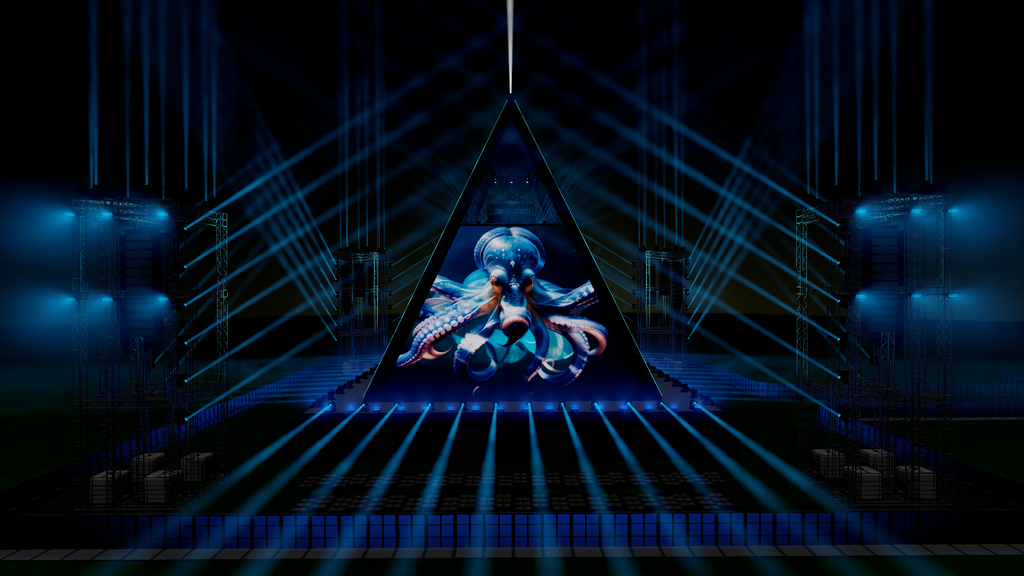
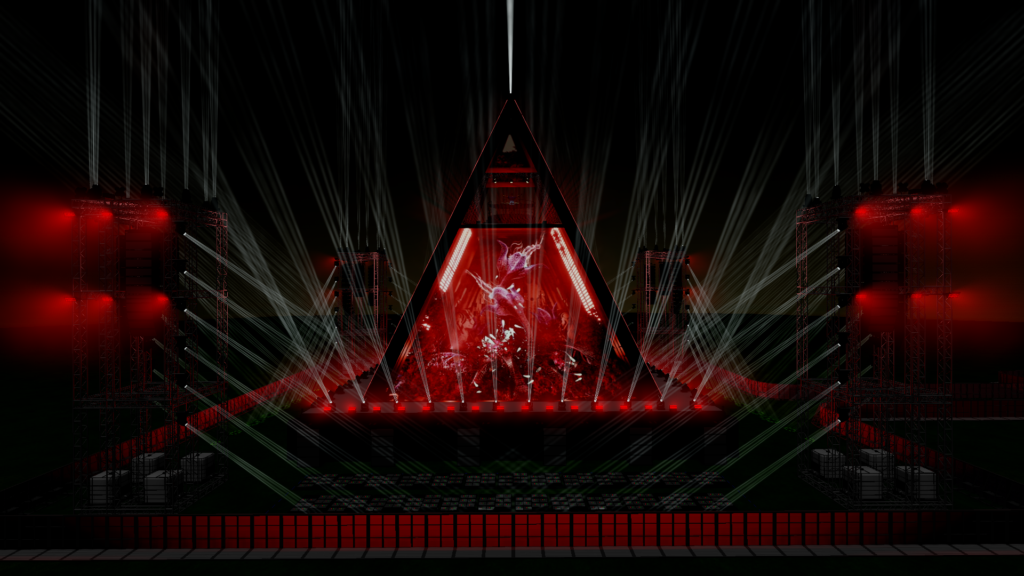
For Rodrigo Rocca, one of the defining creative decisions was outlining the edges of the pyramid with linear strobes.
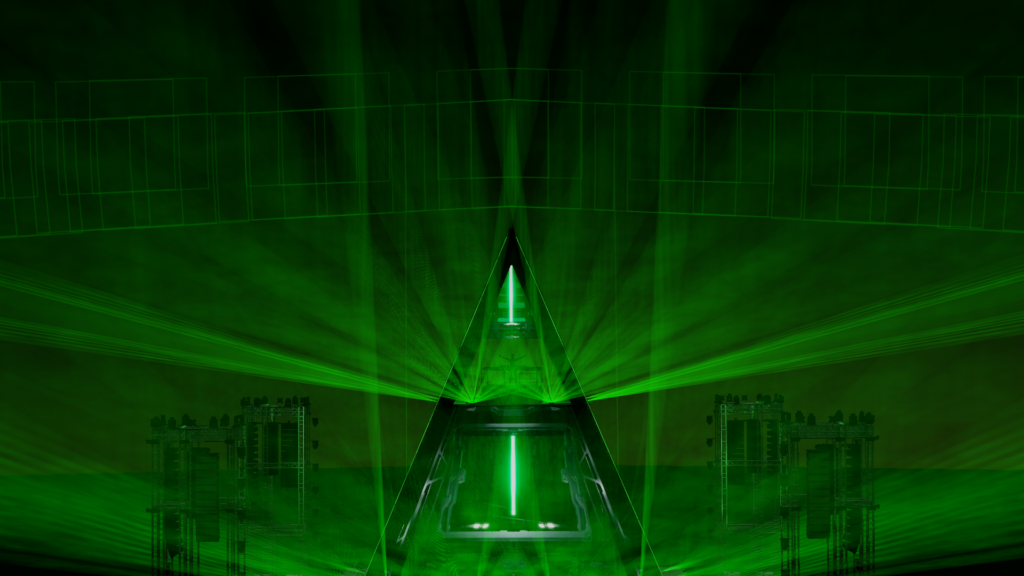
Moving lights positioned on the towers formed what he describes as a kind of grid that appears to protect the pyramid, while a moving light embedded directly into the pyramid’s apex projects a beam into the sky.
Lasers also form an important part of the visual experience and are, as Rodrigo Rocca notes, a trademark element of Alok’s shows.
WYSIWYG gave Rodrigo Rocca the ability to experiment with equipment and positioning while developing the design.
“The ability to try out each type of equipment in every possible position and see the result of each one in 3D is perfect.”
“Perhaps that’s what fascinates me most about WYSIWYG: having a complete platform in a single software.”
From Visualization to the Final Show
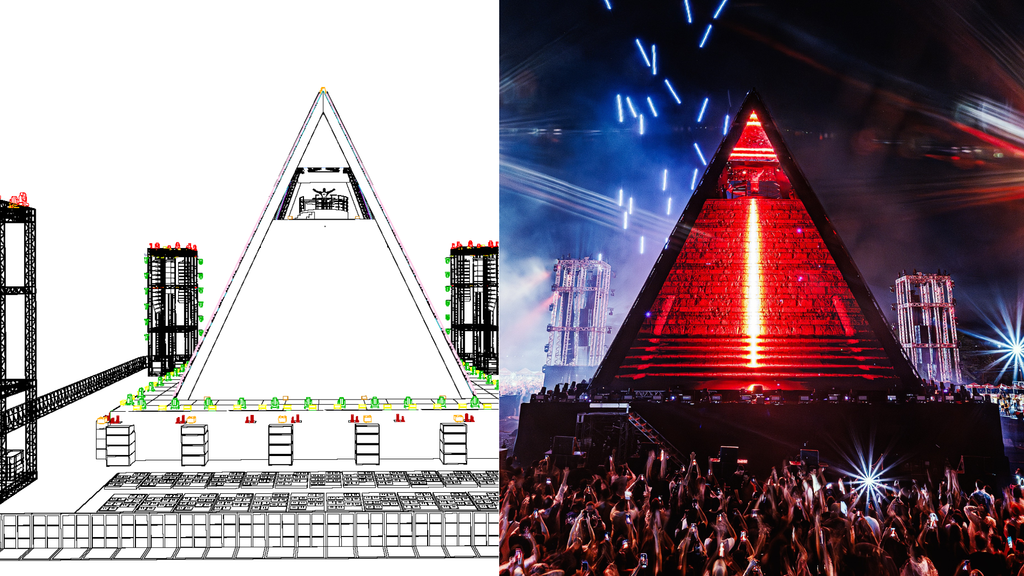
The renderings also allowed Rodrigo Rocca to see a realistic representation of the production before the final show.
Asked how closely the WYSIWYG visualization matched the finished result, Rodrigo said:
“3D renderings and visualizations are really very close to reality, and you can get a very realistic view of what you’ll have in your show, which is why it’s called WYSIWYG.”
WYSIWYG also supported the practical side of the production, particularly equipment assembly, positioning, patching and documentation.
He also highlights the ability to export via MVR and make the project compatible with the console and an external visualizer as another important part of the workflow.
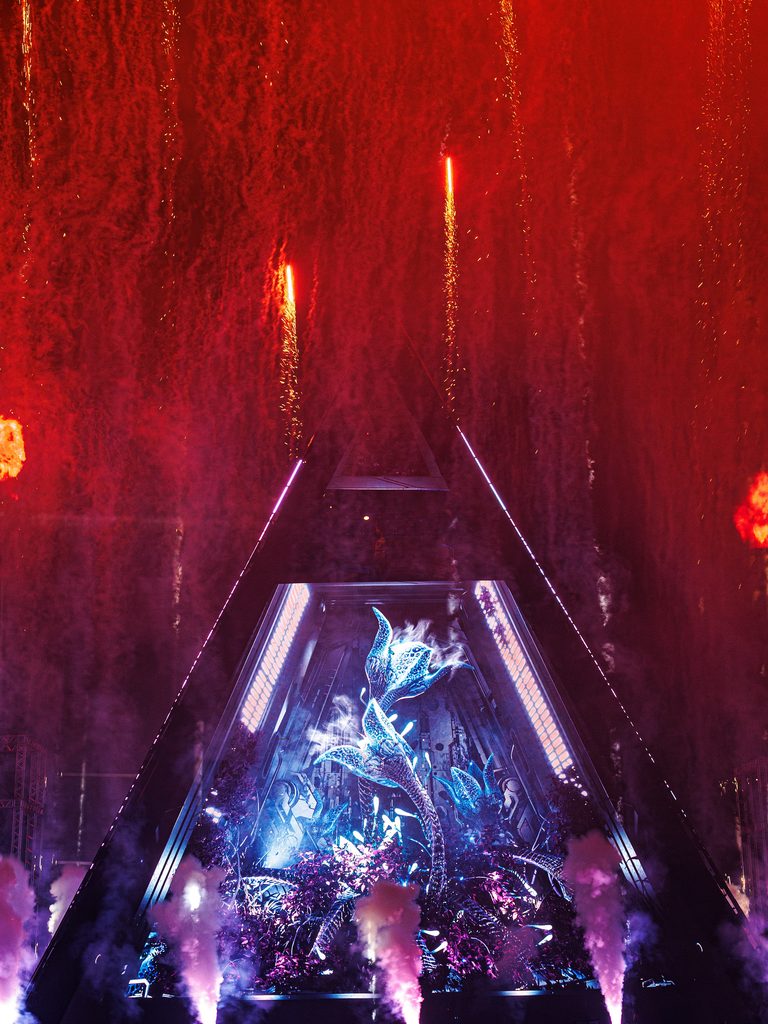
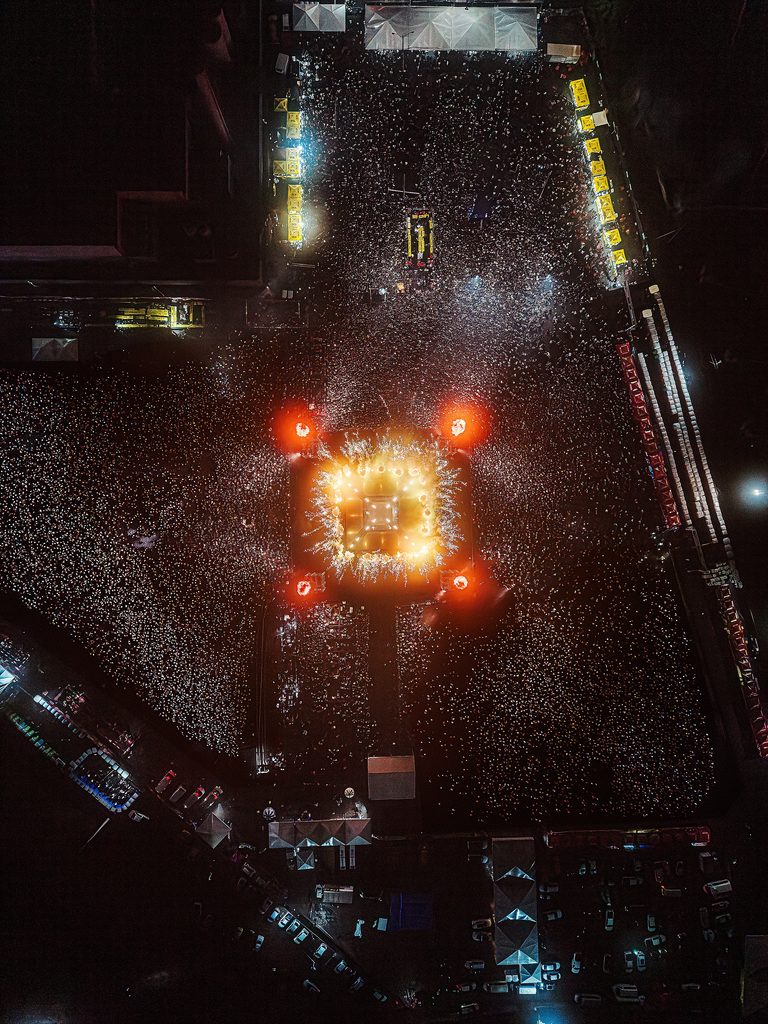
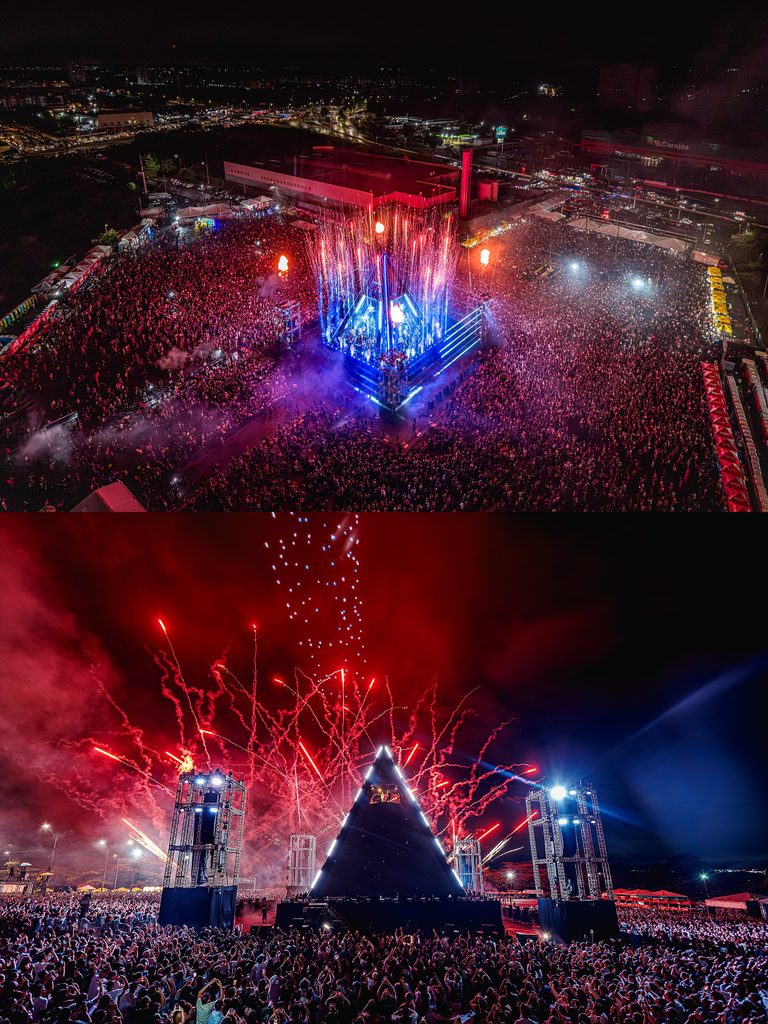
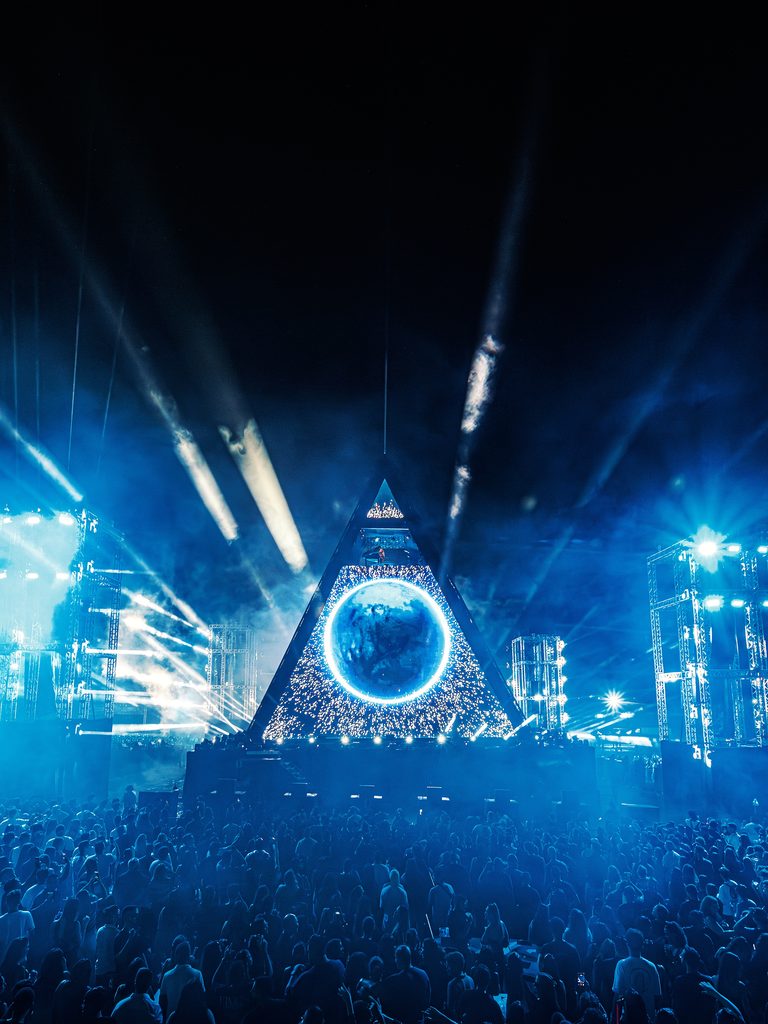
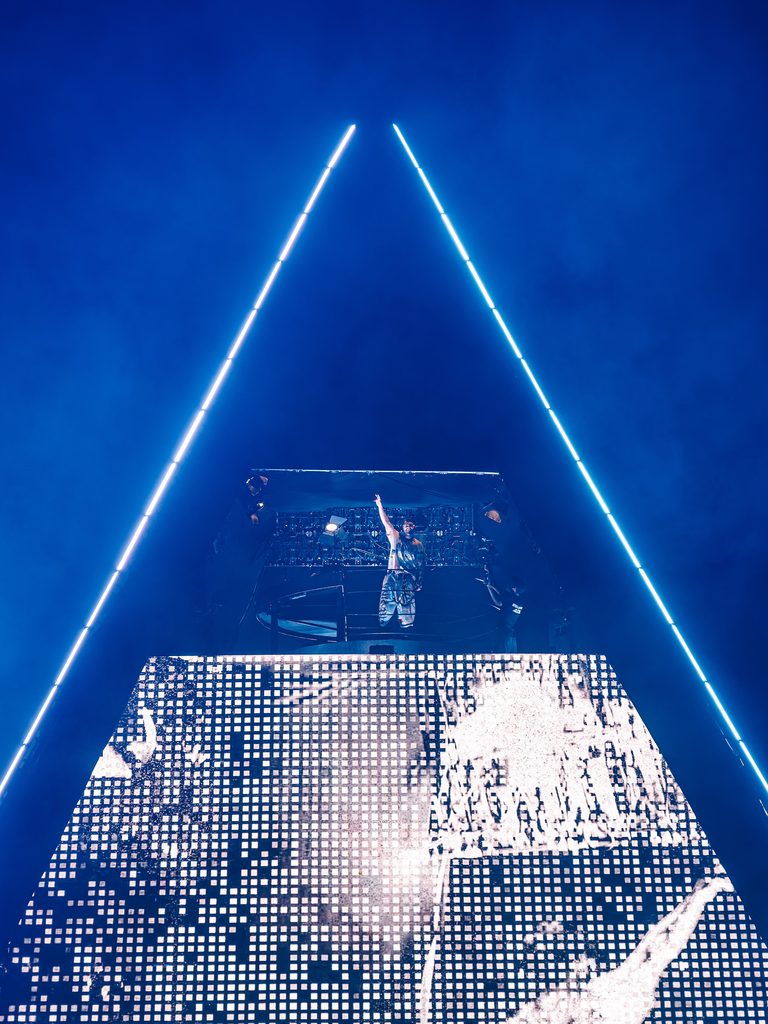
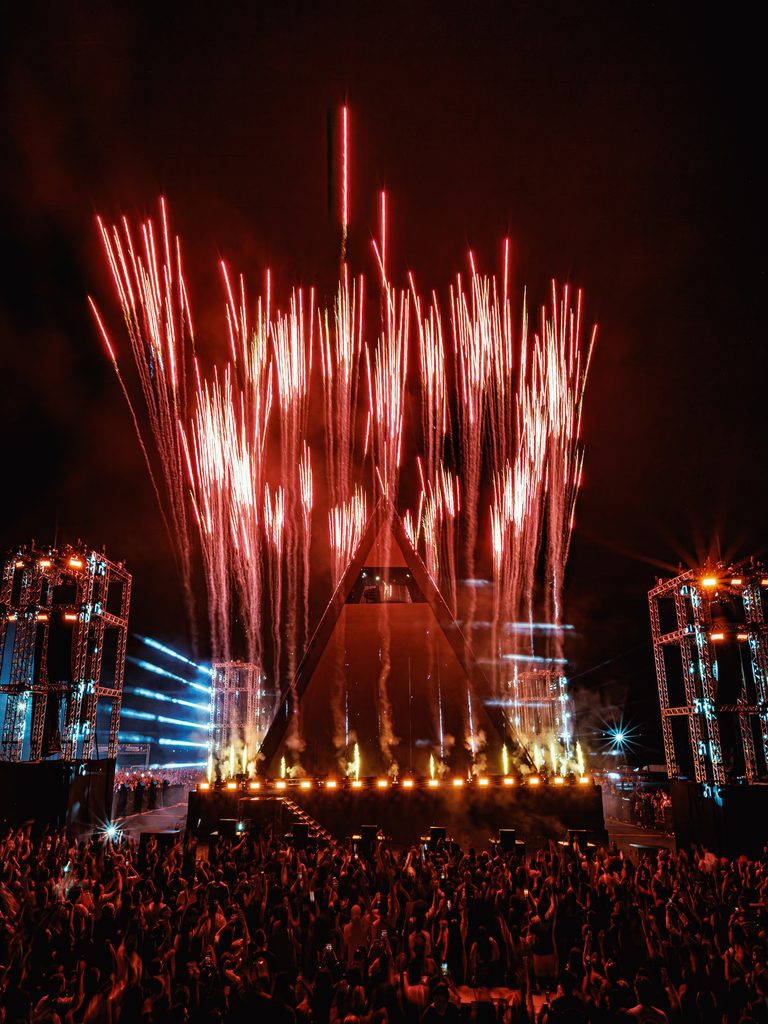
Photo and video credits: Agência Yotto
Bringing Light, Lasers, Drones and Effects Together
The production details Rodrigo shared demonstrate the scale of the show.
The average equipment configuration includes:
- 1 × Veloce at the centre on top
- 128 × Beam 380 Outdoor
- 32 × Washled 1940 Outdoor
- 96 × JDC
- 96 × P5
- 92 × 1m linear strobes
- 24 × Mini Brutt 4 Lamp
- 8 × Fresnel
- 32 × 70W lasers
- 42 DMX universes
- 3 × grandMA3 Full Size, running in Mode 3
- 4 × PU-Large
- 300 drones
- Fire machines, CO₂ and other special effects
Rodrigo Rocca notes that the exact number of fixtures has changed across different versions of the production and continues to vary depending on the size of the space and the audience.
For the show in Teresina, Piauí, Brazil, Rodrigo Rocca reports an audience of 150,000 people.
Among all the elements in the production, there is one sequence that stands out to him.
“When the pyramid interacts with the drone show, everything perfectly synchronized with lighting, visual content and effects is undoubtedly the pinnacle of the spectacle.”
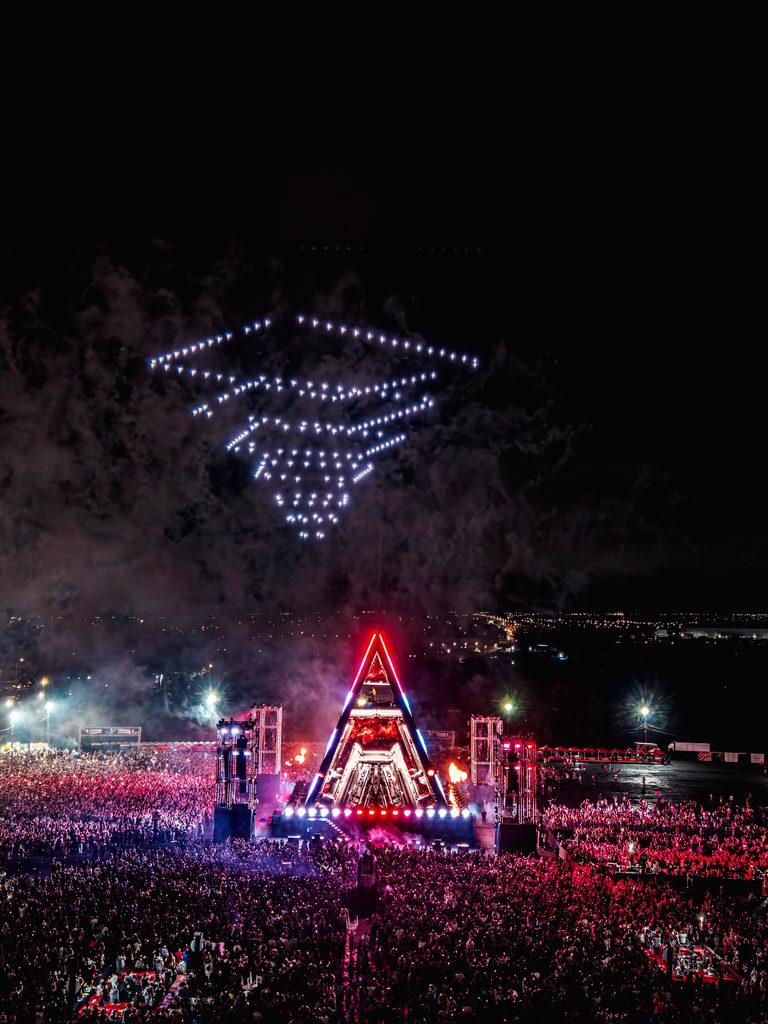
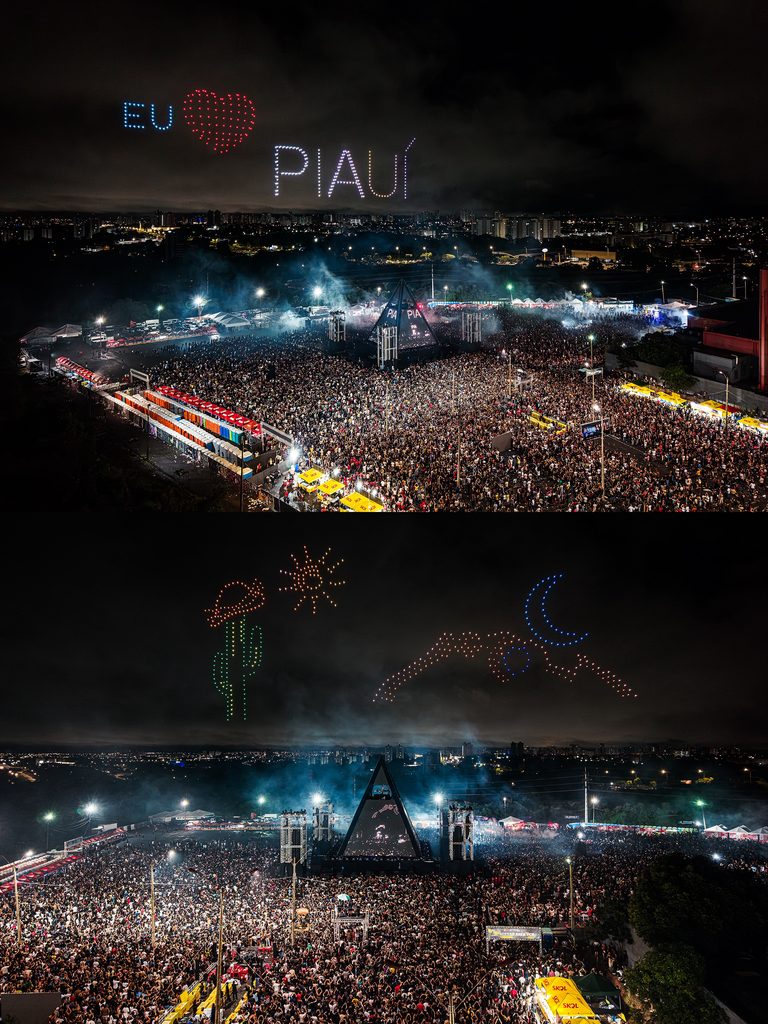
When asked what part of the lighting design made him most proud, Rodrigo’s answer wasn’t about one particular fixture or effect.
It was the final result.
“Everything working perfectly, all the pieces falling into place, and the whole team working together to deliver something spectacular!”
For Rodrigo Rocca, productions of this scale also reinforce the importance of the people behind them.
Working on major productions brings significant responsibility. Attention to detail is critical because, as the scale of an event increases, so can the cost of a mistake.
That makes being surrounded by skilled professionals and a united team focused on delivering the best possible result especially important.
“No one pulls off an event of this magnitude alone.”
Rodrigo Rocca credits the entire team involved in the project and, in particular, Alok for trusting him with what he describes as a responsibility “as massive as a pyramid.”
And when asked to describe the value of WYSIWYG on this project in just one word, his answer was simple:
“Essential.”
See WYSIWYG come to life in this incredible snippet from the final show.