
Creative lighting drives immersive live experiences, and WYSIWYG empowers designers to visualize, refine, and execute bold ideas with precision—before stepping on site.
- Real-time visualization turns creative lighting ideas into fully realized designs
- Preprogramming reduces on-site time and risk
- Accurate rendering ensures confidence in execution
- Seamless collaboration aligns teams around a shared vision
- Proven in world-class productions, from tours to broadcasts
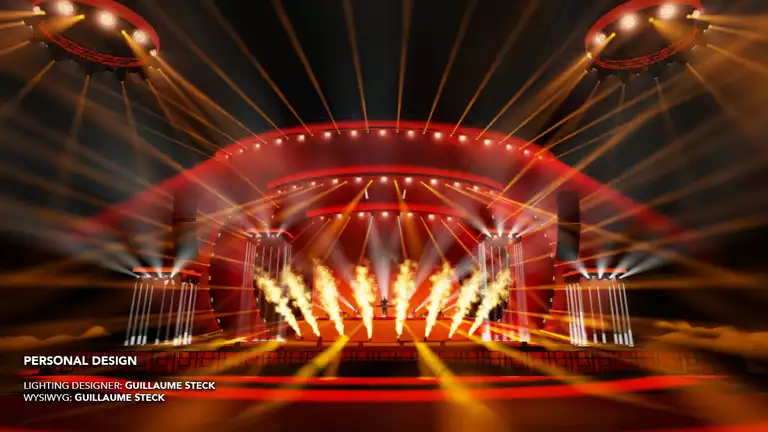
Before a single note rings out or a performer steps into the spotlight, creative lighting has already shaped the audience’s experience. It sets the tone, builds anticipation, and transforms a physical space into something immersive (and, ideally, unforgettable). From sweeping beams that energize a stadium to subtle shifts in color that guide emotion, creative lighting is integral to storytelling.
Today’s productions demand more than illumination. They require fully realized environments driven by bold ideas and precise execution. As audiences grow more sophisticated, so too must the behind-the-scenes creative lighting solutions. Designers must deliver dynamic, responsive visuals that evolve in real time, seamlessly integrating with video, scenic elements, and performance.
Tools like WYSIWYG empower designers to explore, refine, and perfect their vision long before a rig goes up or a fixture turns on. By enabling true-to-life visualization and preproduction, WYSIWYG opens the door to a limitless creative lighting design approach, where ideas can be tested, iterated, and confidently brought to life.
From Vision to Reality: The Evolution of Creative Lighting Design
Creative lighting design has come a long way from hand-drawn plots and on-site experimentation. In the past, designers relied heavily on imagination, experience, and limited visualization tools to bring concepts to life. They made critical decisions without ever seeing the full picture until load-in, under tight timelines.
Today’s productions leave even less room for guesswork. Massive touring rigs, intricate pixel mapping, and tightly synchronized show elements demand precision from the very beginning. Designers must think beyond individual fixtures and approach each project as a fully integrated visual system. Every cue, color, and movement plays a role in shaping the audience’s journey.
WYSIWYG transforms that process. It allows designers to move seamlessly from concept to execution within a single environment. Instead of imagining how creative lighting ideas might look, designers can build, visualize, and refine them in real time. They can test bold looks, adjust positioning, and fine-tune timing before stepping into the venue.
This shift both improves efficiency and elevates creativity. When designers remove uncertainty, they gain the freedom to push boundaries and deliver more ambitious, immersive experiences.
Unlocking Creative Lighting Ideas with WYSIWYG
Great creative lighting starts with exploration. Designers need the freedom to experiment, iterate, and evolve their ideas without constraints. WYSIWYG gives them that freedom by turning imagination into something they can see, shape, and perfect.
With accurate, real-time visualization, designers can work with creative lights in a fully realized digital environment. They can preview beam angles, color mixing, gobos, and atmospherics with striking realism. Instead of waiting for physical setup, they can instantly evaluate how each element interacts within the larger design.
This capability changes how designers approach creative lighting ideas. They can try unconventional fixture layouts, explore layered effects, and build complex looks that would feel risky or time-consuming to test on-site. Each iteration brings them closer to a refined, intentional design.
WYSIWYG also supports preprogramming, allowing designers and programmers to develop cues and sequences ahead of time. By the time they arrive at the venue, they already have a vision in motion.
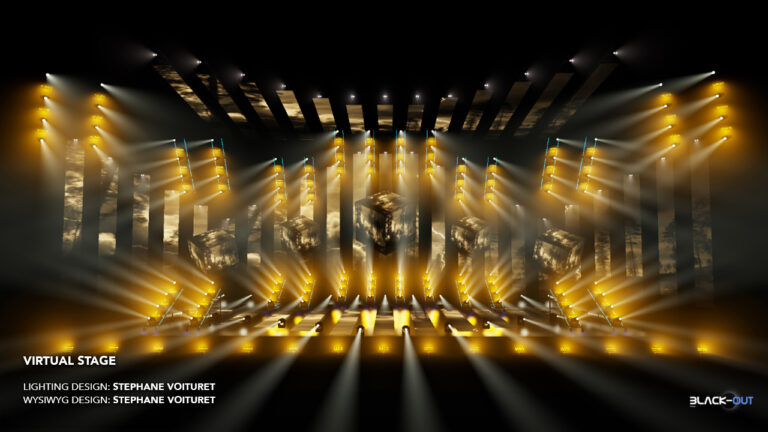
Designing Immersive Worlds: Creative Stage Lighting in Action
Creative stage lighting illuminates performers and, at its best, builds worlds. Designers use light to define scale, create movement, and guide the audience’s focus from one moment to the next. Every cue becomes part of a larger visual narrative.
WYSIWYG gives designers the ability to construct those worlds well in advance. They can map out entire rigs, layer light sources with video and scenic elements, and choreograph transitions with precision. This level of control proves essential in large-scale productions, where timing and visual cohesion must align perfectly.
Across global tours, broadcast events, and theatrical productions, designers rely on WYSIWYG to previsualize complex environments. They can simulate sweeping aerial looks, tightly focused key lighting, and immersive atmospheres that surround the audience.
That preparation shows. It leads to smoother load-ins, more intentional design choices, and immersive experiences that feel cohesive from the first cue to the final blackout.
Precision Meets Creativity: Real-Time Visualization & Programming
Strong creative lighting solutions depend on both imagination and accuracy. Designers need tools that respond instantly and reflect real-world behavior. WYSIWYG delivers that balance by combining real-time visualization with powerful programming capabilities.
Designers can connect lighting consoles directly to their WYSIWYG file and see changes the moment they make them. Every adjustment – intensity, color, position, timing – updates in real time. This immediate feedback loop allows programmers and designers to refine cues quickly and confidently.
Accurate fixture libraries and photometric data ensure that what designers see on screen matches what appears on stage. Beam angles, brightness levels, and color rendering behave as expected, which reduces surprises during load-in.
The resulting precision speeds up the entire workflow. Teams can solve problems early, refine creative lighting design decisions faster, and spend less time troubleshooting on-site. Instead of using valuable show time to experiment, they can focus on polishing the final result.
Limitless Collaboration
Teams using WYSIWYG can review designs in a fully visualized environment, which makes communication clearer and more efficient. Designers can present creative lighting ideas in a way that stakeholders immediately understand. Directors can give feedback based on what they see, not what they imagine.
This clarity reduces miscommunication and speeds up decision-making. Teams can approve looks earlier, adjust faster, and move forward with fortitude. Whether working on a global tour or a high-profile broadcast, everyone stays aligned around the same visual goal.
Pushing Boundaries: Innovation in Creative Lighting
Designers now integrate lighting with motion tracking, interactive systems, and real-time data to create environments that respond to performers and audiences alike.
WYSIWYG supports this evolution by giving designers a space to experiment without limits. They can test ambitious, creative lighting ideas, explore unconventional rig configurations, and build layered effects that would feel difficult to prototype physically.
As productions demand more immersive experiences, designers must think beyond static looks. They must create dynamic systems that adapt and evolve throughout performances. WYSIWYG helps designers develop and refine those systems before they reach the stage.
Lighting the Future of Live Experiences
Creative lighting transforms moments into memories. It shapes how audiences feel, where they focus, and how they connect with a performance. As expectations continue to rise, designers need tools that match their ambition.
WYSIWYG gives them that edge. It allows them to explore bold, creative lighting ideas, refine every detail, and deliver immersive experiences with confidence. From the earliest concept to the final cue, it supports every step of the journey.
To see what’s possible, explore WYSIWYG’s capabilities and dive into real-world examples through the “WYSIWYG in Action” stories. Discover how today’s most innovative teams use it to bring creative lighting design to life, and start building your next unforgettable experience.